

PD 3.1 and 140W: reading a multi-port power budget
How USB Power Delivery 3.1, PPS and Quick Charge share a fixed wattage budget across ten ports, and why "PD 140W" is a lead-port figure.
“PD 140W” on a ten-port charger does not mean ten ports of 140W. It means the lead port can negotiate 140W when the budget allows. Reading the rest of the spec sheet is how you find out what happens on the other nine.
The protocols in play
Every LEVA charger negotiates PD 3.1, PD 3.0, PPS, QC 3.0/4.0, BC 1.2 and AFC. They are not alternatives — they are the different languages a connected device might speak, and the charger answers in whichever one the device opens with.
- USB PD 3.1 extends Power Delivery above the old 100W ceiling, which is where the 140W figure comes from. It is what a current-generation laptop asks for.
- PPS (Programmable Power Supply) lets the device request a fine-grained voltage rather than a fixed step, which reduces heat inside the device during fast charging.
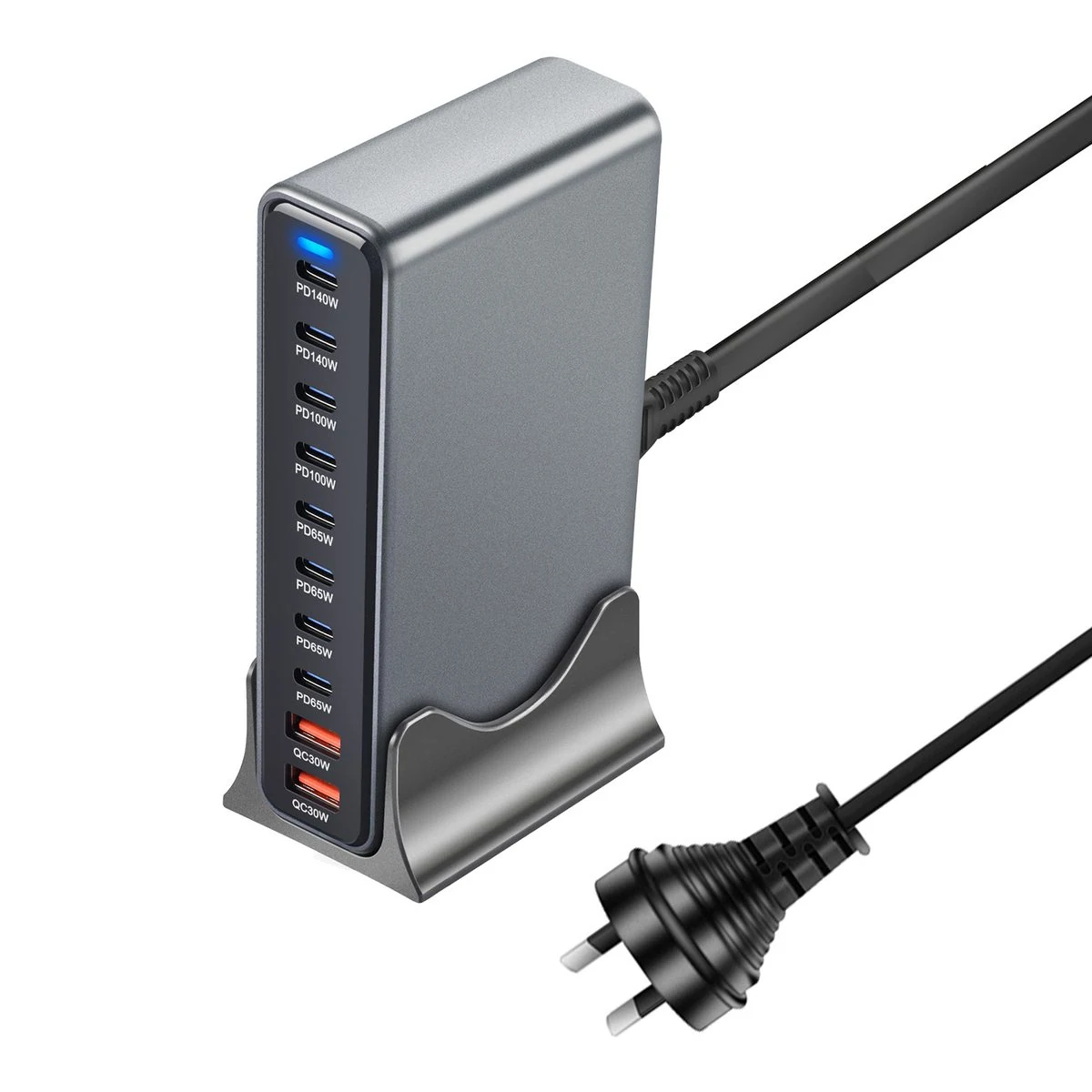
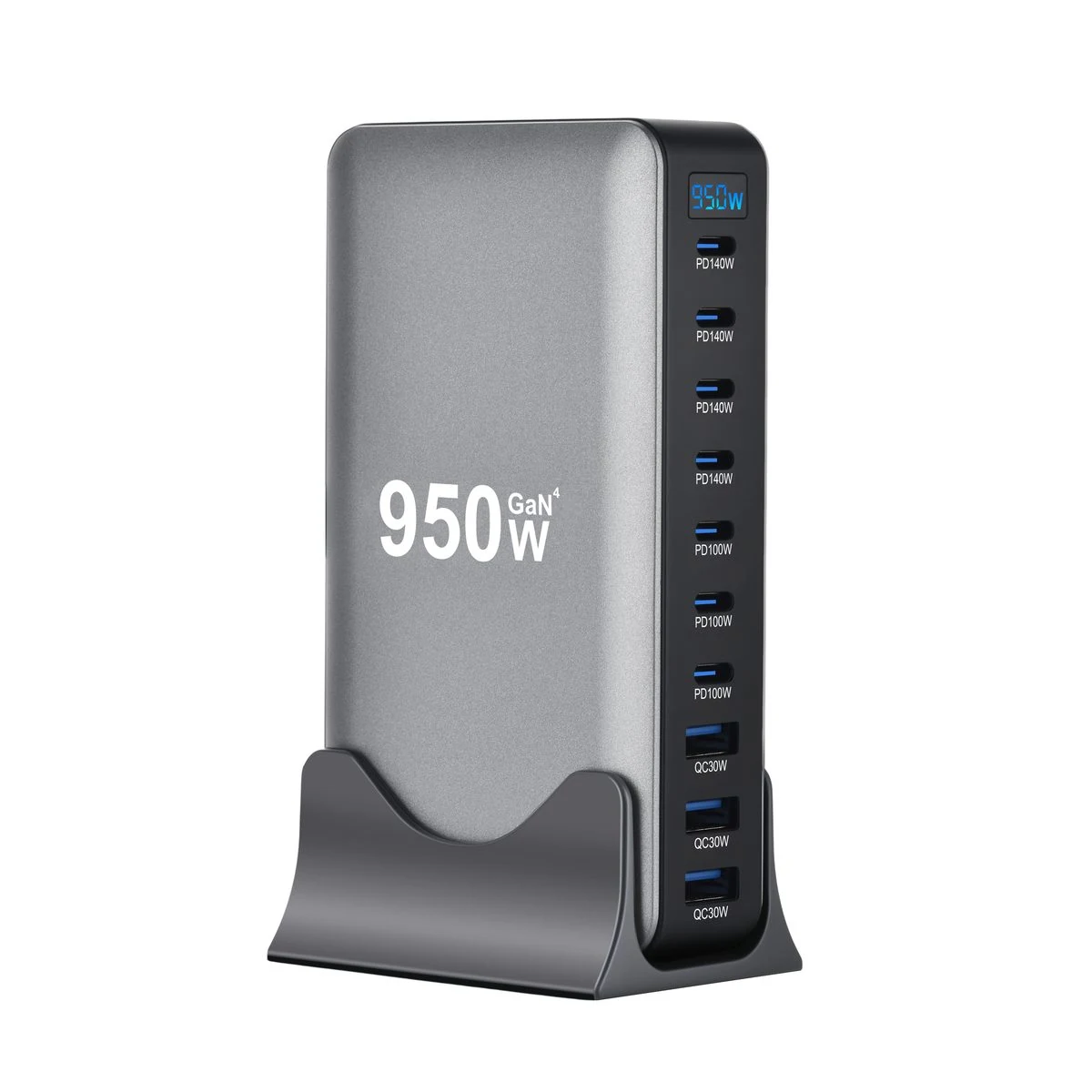
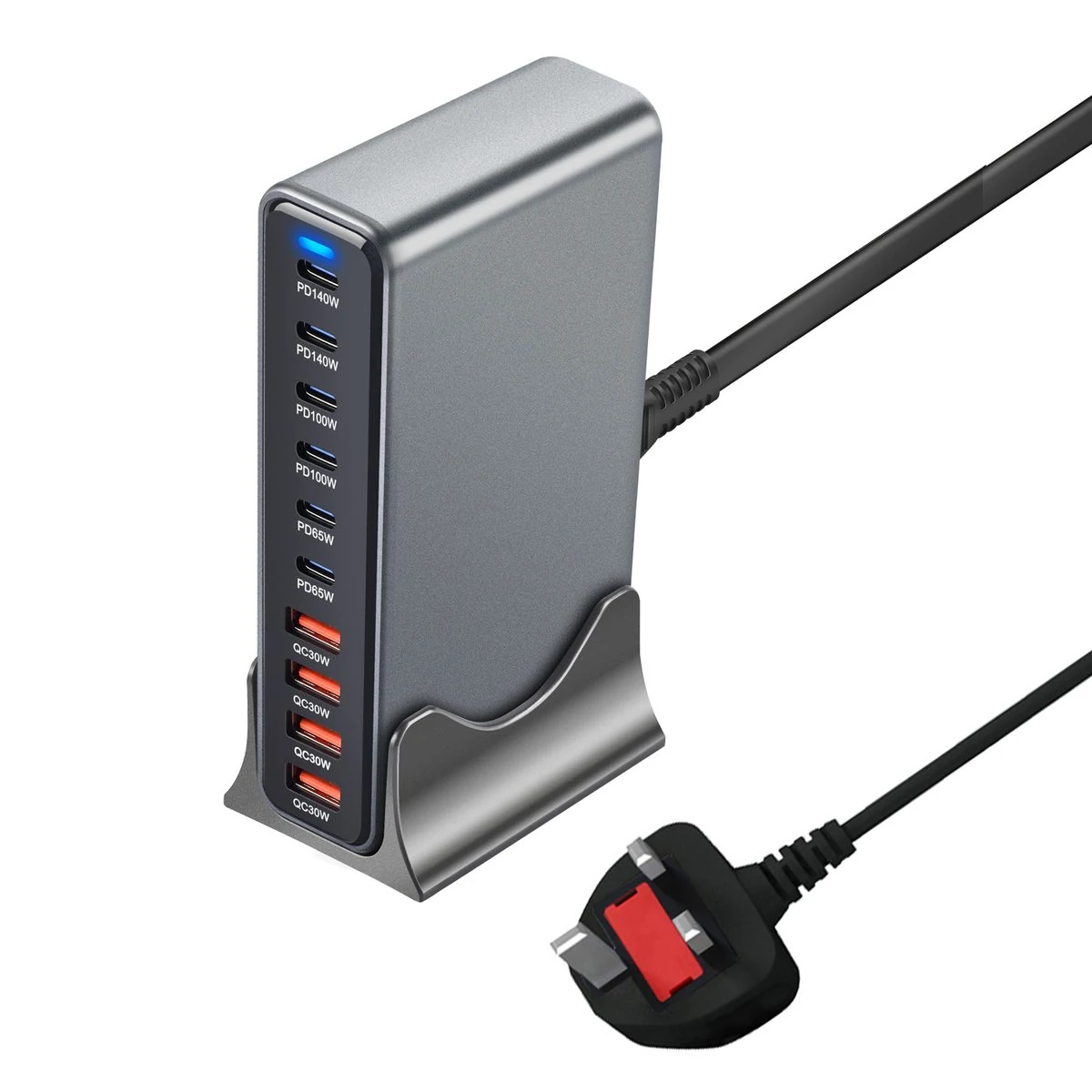
- QC 3.0/4.0 and AFC serve the USB-A side and the Android install base. This is why our hospitality and retail models carry five USB-A ports at 30W — guest devices are not all new.
- BC 1.2 is the fallback that keeps an older accessory charging at all.
How a fixed budget gets allocated
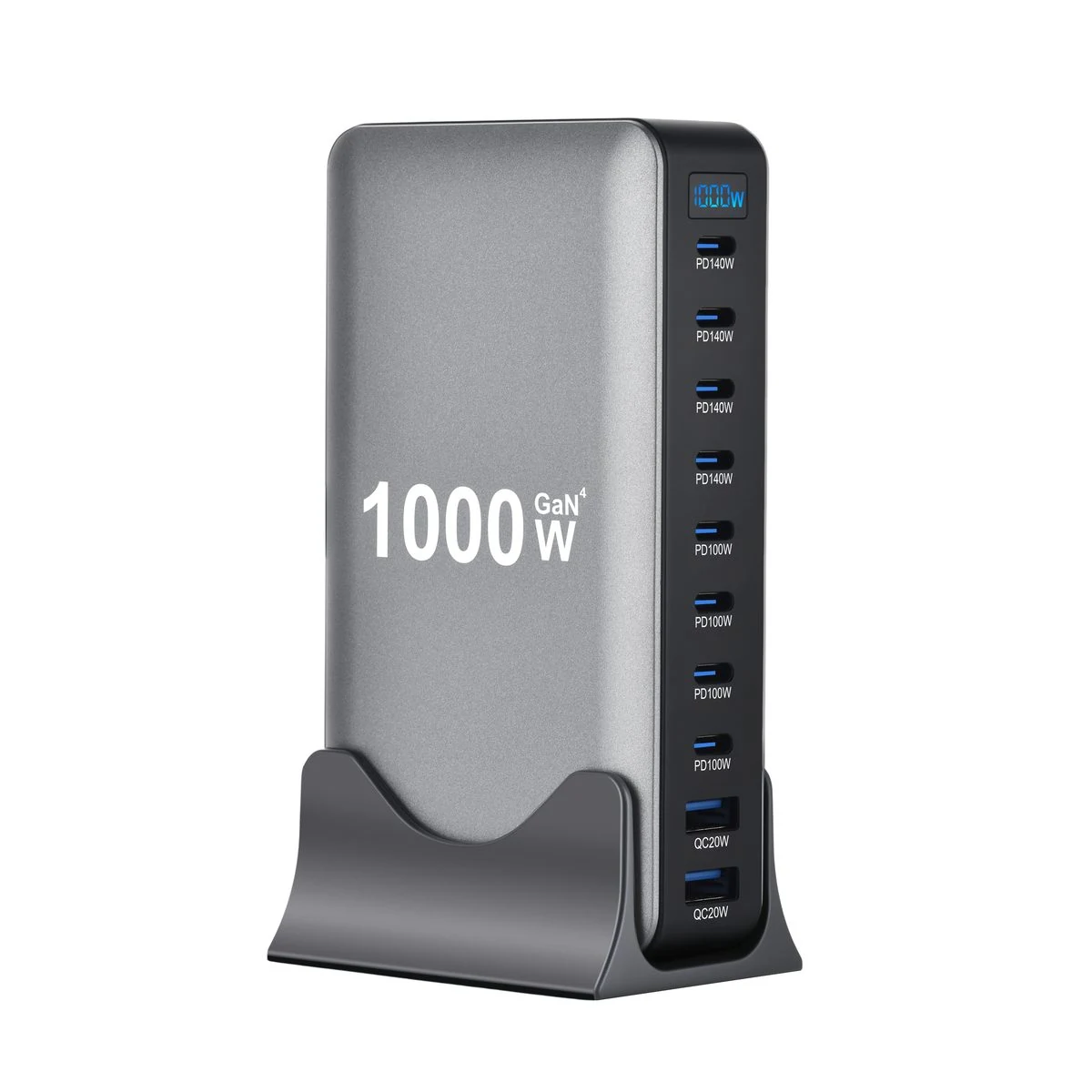
A charger has one total figure — 800W on the LW800, 1000W on the LW1000 — and a per-port maximum. The LW800 spec sheet reads PD1/2 at 140W, PD3/4 at 100W, PD5–8 at 65W, and two QC-A ports at 30W each. Add the maxima and you exceed 800W, which is normal: the ceiling is the total, and the charger negotiates downwards when every port is loaded at once.
What matters is that the allocation is negotiated per port rather than fixed in hardware. Plug one laptop into an eight-port unit and it gets the lead-port figure. Plug in eight and the charger settles each port against the total budget. There is no fixed split to plan around, and no port that only works when the others are empty.
Reading a spec sheet in practice
Three numbers tell you most of what you need. Total output is the sustained ceiling. Total ports, in the form 8C + 2A, tells you the connector mix. USB-C output broken down per port tells you how the wattage is tiered. A unit quoted as 5C + 5A with PD 140W, like the LW695, is shaped for a floor of mixed-age devices. A unit quoted as 8C + 2A, like the LW800, is shaped for a room full of modern laptops.
If you are unsure which shape fits, the port mix method works backwards from the devices instead of forwards from the wattage.
More from the knowledge base.
GaN vs legacy silicon: what changes in a desktop charger
Why gallium nitride switching lets a 1000W charger fit on a desk, and what the generation number on a LEVA…
ReadChoosing a port mix for a mixed device fleet
USB-C or USB-A, and how many of each. A practical method for matching port count to the devices that will…
ReadWhat an eight-hour aging cycle catches
The four QC checkpoints between component reel and pallet wrap, and why the aging bench is the one that…
ReadNeed this applied to your order?
Send the requirement and we will come back with model picks, lead time and pricing within 24 hours.