
GaN vs legacy silicon: what changes in a desktop charger
Why gallium nitride switching lets a 1000W charger fit on a desk, and what the generation number on a LEVA spec sheet actually refers to.
A 1000W desktop charger is not a bigger version of a 65W wall brick. The thing that makes the difference fit on a desk instead of in a rack is the switching device.
Why silicon runs out of room
A switch-mode power supply converts mains AC into a regulated DC rail by chopping it at high frequency. The faster you chop, the smaller the magnetics and capacitors can be for the same output. Silicon MOSFETs put a ceiling on that frequency: push them faster and switching losses climb, losses become heat, and heat forces a larger enclosure and more ventilation — which undoes the size you were trying to win.
That ceiling is why a legacy 300W multi-port adapter is a floor-standing box with a fan, and why individual 100W laptop bricks stayed the practical answer for so long.
What gallium nitride changes
GaN switches at higher frequency with lower conduction and switching losses. Two consequences follow directly. The passive components shrink, so the same wattage occupies a smaller volume. And less energy is wasted as heat, so the enclosure does not have to be built around cooling a loss budget. Our own measure of the gain is density: roughly 30% smaller per watt than the legacy silicon designs it replaced.
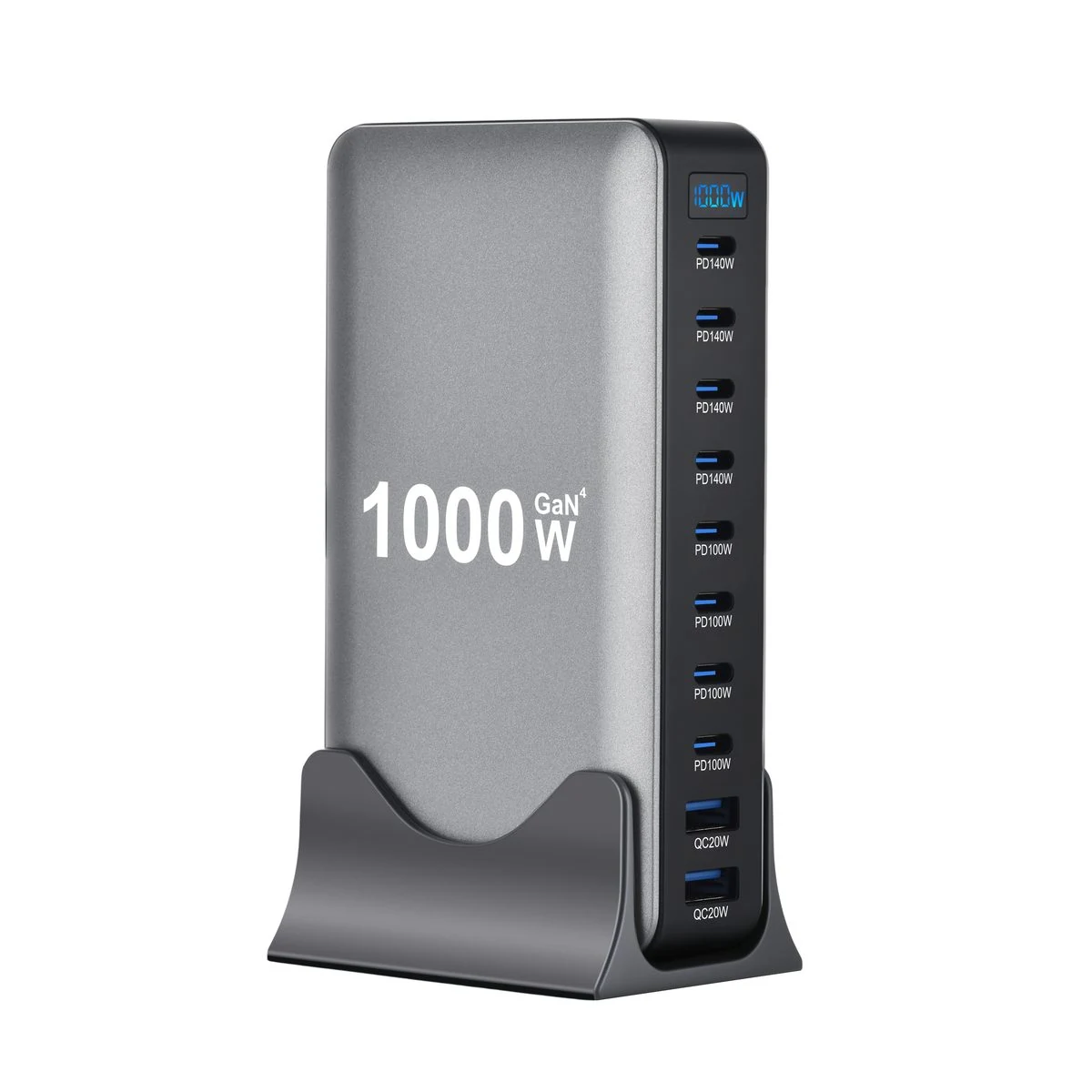
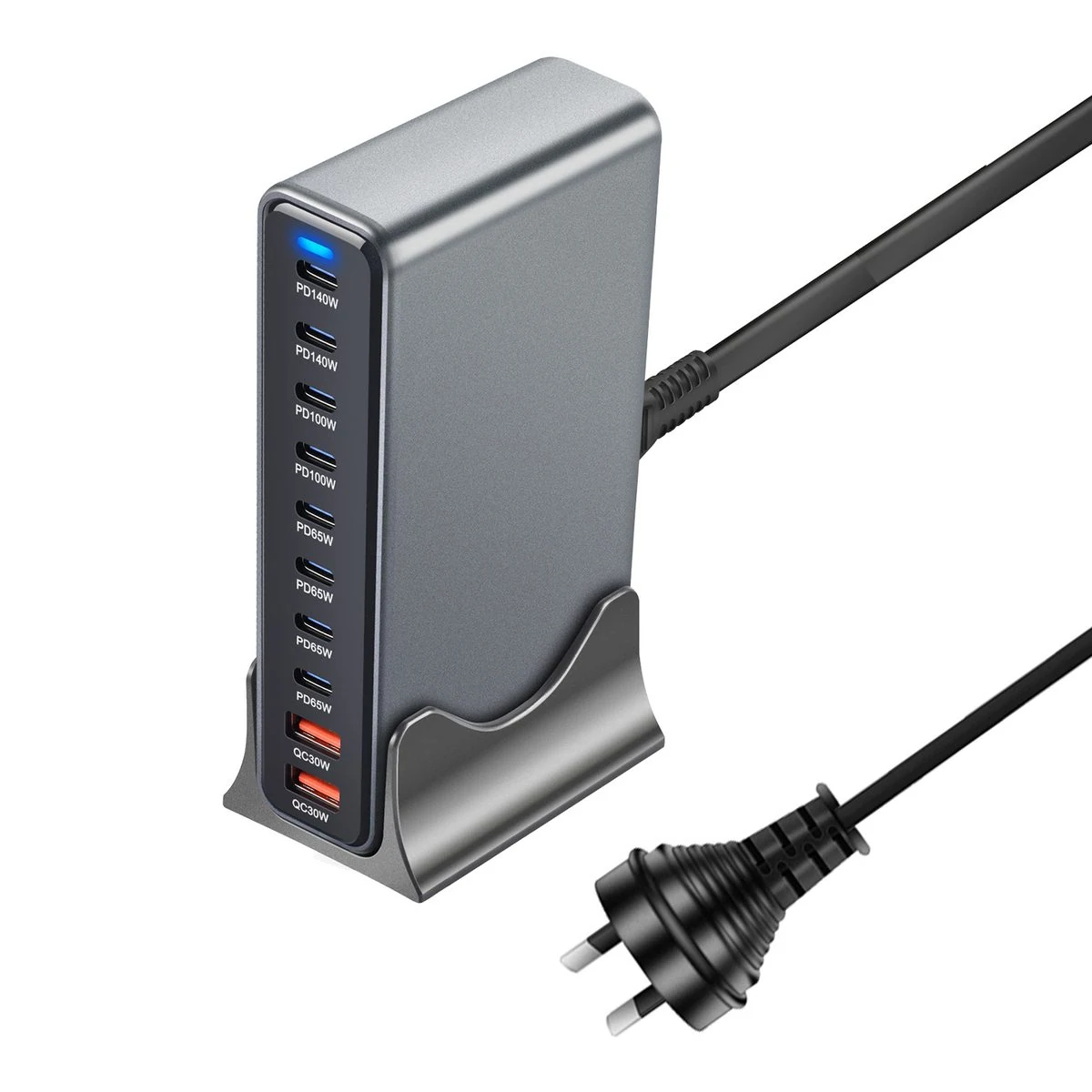
The practical result on a spec sheet is a unit like the LW1000, which delivers 1000W sustained from a desktop footprint, with four ports capable of PD 140W simultaneously.
What the generation number means
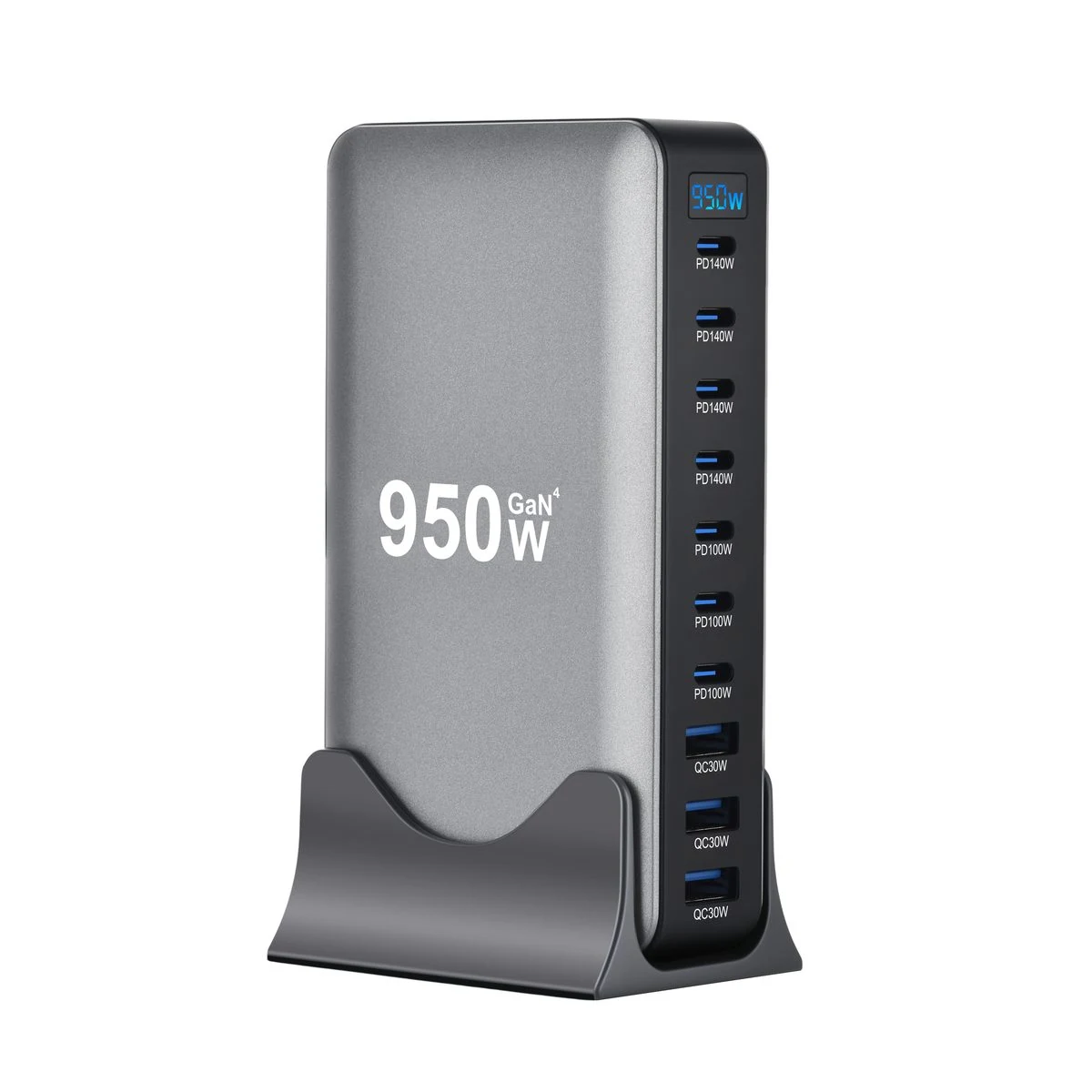
You will see GaN¹ through GaN⁴ across the LEVA range. The number refers to the generation of the switching silicon and the control topology built around it, not to a marketing tier. Our first GaN desktop charger shipped in 2020 in the 240W class. The GaN⁴ generation arrived in 2024 and is what the LCD telemetry series — LW810, LW880 and LW950 — is built on. Later generations buy two things: more output from the same volume, and enough thermal headroom that the unit holds rated output continuously rather than throttling back after a warm-up period.
Where it shows up in the field
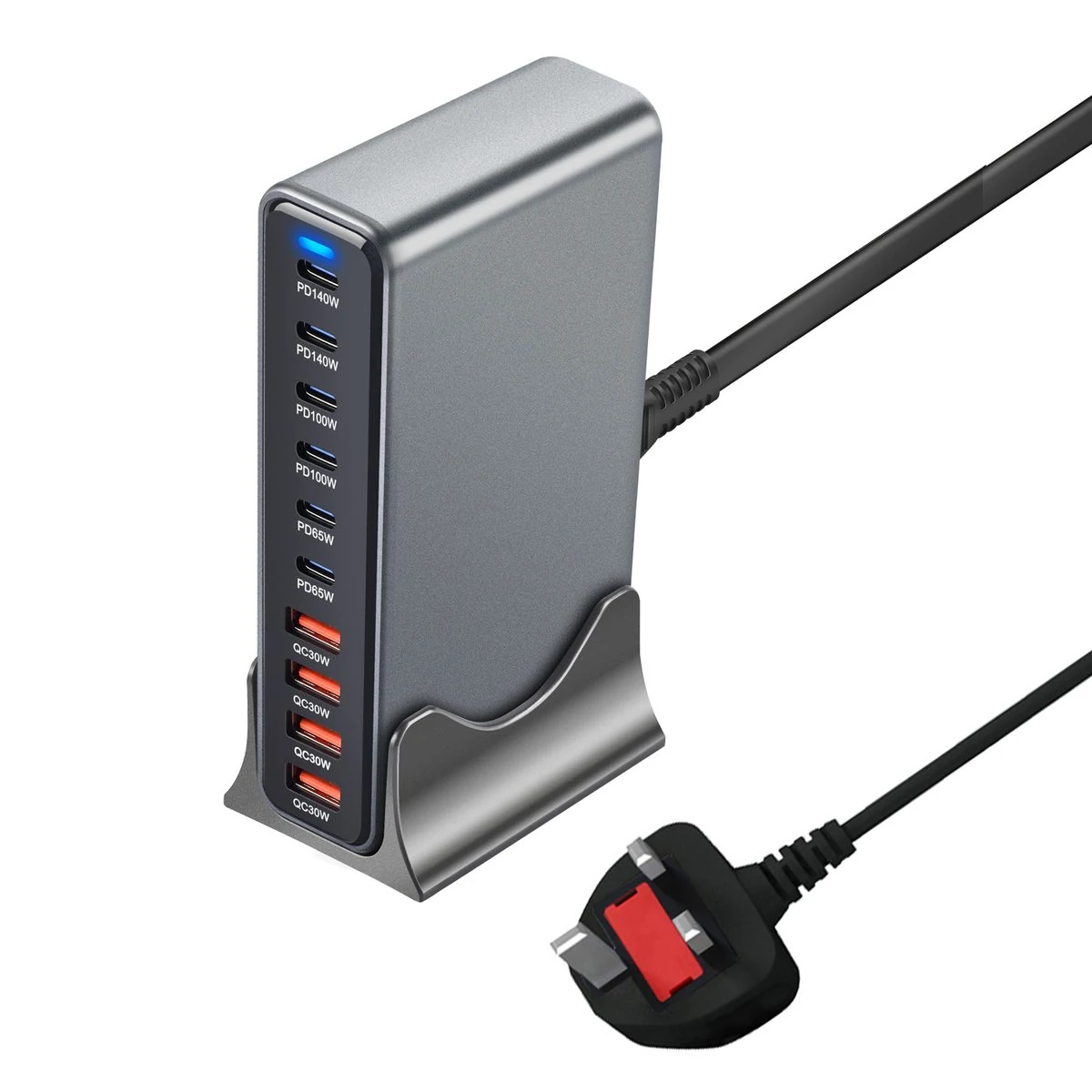
Density is the headline, but continuous duty is what buyers notice six months in. A charger specified for a single laptop and a charger specified for a rack of laptops running all day are different designs even at the same wattage. Thermal margin, component derating, and what happens when one port shorts are where the difference lives — which is why every LEVA unit runs eight hours at 100% load before it is packed.
More from the knowledge base.
PD 3.1 and 140W: reading a multi-port power budget
How USB Power Delivery 3.1, PPS and Quick Charge share a fixed wattage budget across ten ports, and why "PD…
ReadChoosing a port mix for a mixed device fleet
USB-C or USB-A, and how many of each. A practical method for matching port count to the devices that will…
ReadWhat an eight-hour aging cycle catches
The four QC checkpoints between component reel and pallet wrap, and why the aging bench is the one that…
ReadNeed this applied to your order?
Send the requirement and we will come back with model picks, lead time and pricing within 24 hours.