
Core Loss, Stacking Factor and Transformer Noise
Iron loss, magnetic flux density and how tightly the laminations sit are the three properties that turn a core material choice into a warranty claim.
Iron loss is bought, not designed out
Silicon steel with extremely low iron loss significantly reduces the energy the transformer consumes with no load on it. That is a running cost the end user pays for the life of the unit, which is why efficiency classes are written into tenders.
Flux density and size
High magnetic induction strength means the transformer delivers more power from the same volume. Choosing a higher flux density grade is often what lets a design hold its rating inside an existing tank.
Stacking and noise
Good stacking performance keeps the core tight. A tight core improves the overall stability of the transformer, reduces noise and vibration, and makes the unit run more quietly - which is frequently the complaint that comes back from site.
Coating and insulation
Insulation coating is applied to both sides of the sheet. A flat, smooth surface with a firmly attached insulating film raises insulation performance and service life; a film that lifts during shearing shorts laminations and pushes loss back up.
Processability
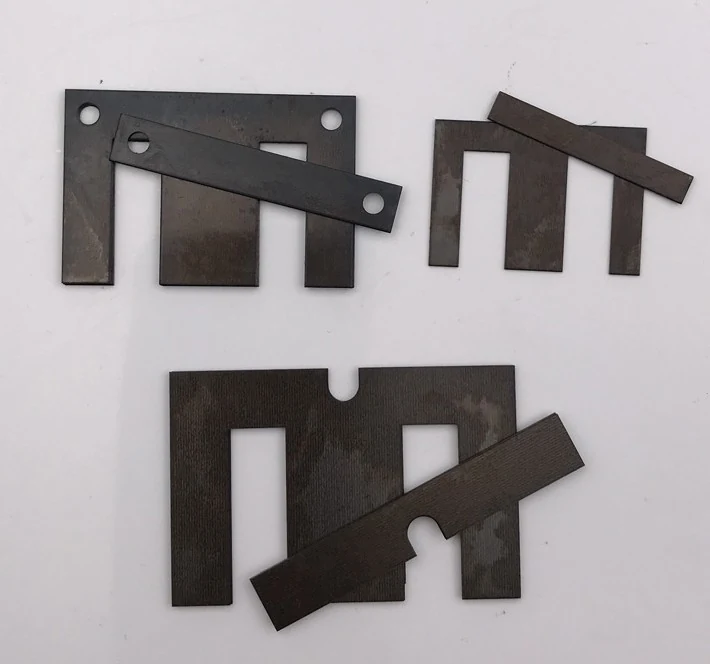
Silicon steel sheets are easy to cut and stack, which suits transformer core manufacturing and keeps the core shop's cycle time predictable.
The standards to quote against
GB/T2521.1, JIS C2552, ASTM A667 and IEC60404-8-4, or an equivalent standard used in your market.
More in the library
Applying this to a live design?
Send the dimensions and the target figures and the sales desk will quote the grade that matches.