
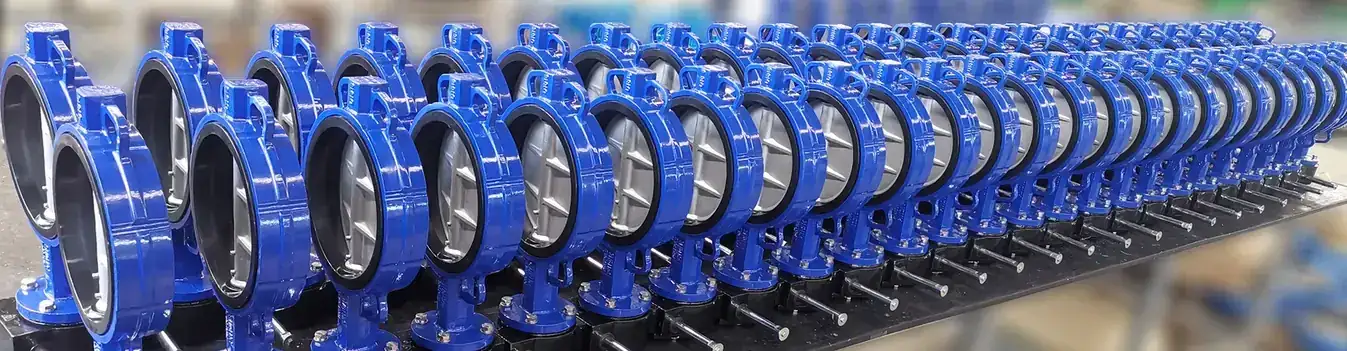
Valve Selection for Water Treatment Plants
Which valve family belongs on each part of a treatment works, from raw water intake to final pumping.
Key Valve Types For Water Treatment Plant Applications
Water treatment plants require valves that handle variable flow, abrasive media, and frequent cycling. The most common types are butterfly valves for mainline isolation, gate valves for high-pressure shut-off, check valves for backflow prevention, and strainers for debris removal. Each type must match the plant's operating pressure, flow rate, and maintenance access needs.
- Butterfly valves are used for on-off and modulating control in pipelines from DN10 to DN2600
- Resilient seated gate valves provide tight shut-off in clean water and low-pressure service
- Metal seated gate valves are suitable for higher pressure and elevated temperature conditions
- Check valves prevent reverse flow in gravity and pump-fed systems
- Strainers protect downstream equipment from suspended solids and debris
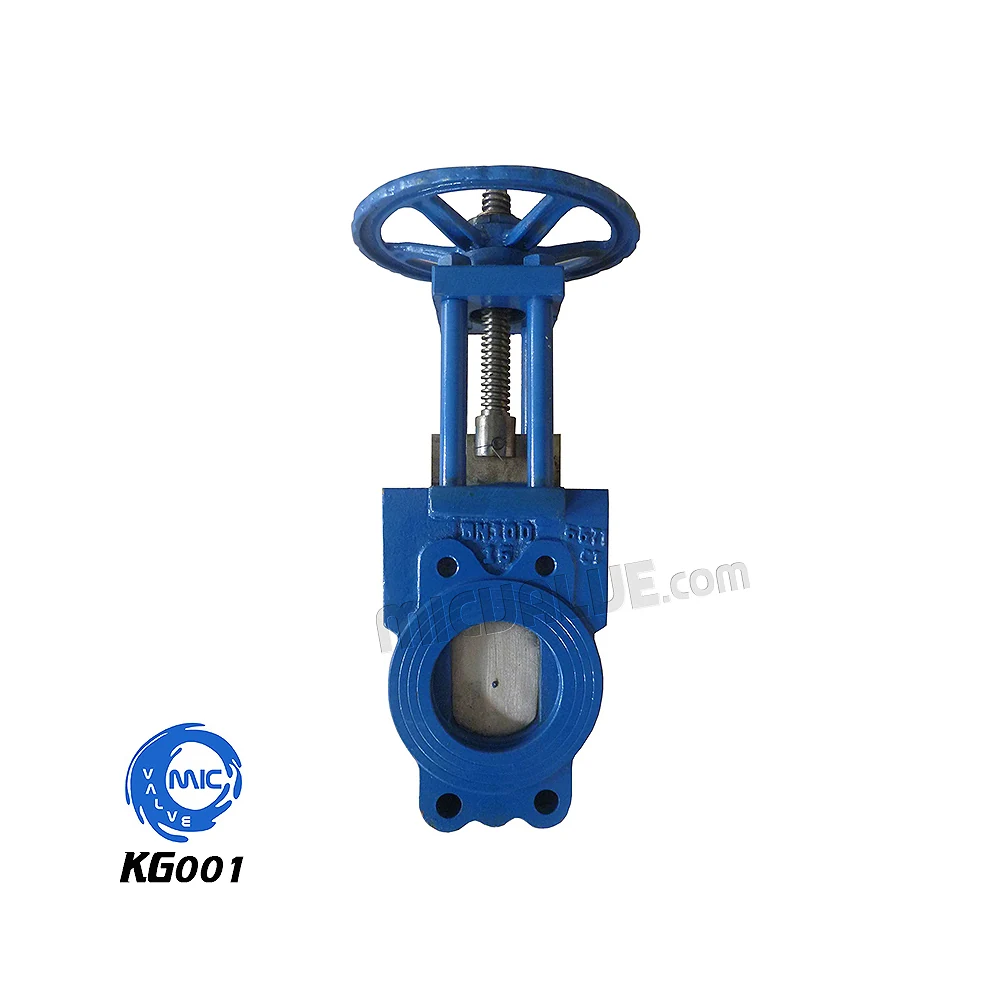
See KG001 Cast Iron Knife Gate Valve
Butterfly Valves For Mainline Isolation And Flow Control
Butterfly valves are the preferred choice for large-diameter pipelines in water treatment due to their compact size, low weight, and low pressure drop. Wafer and lug body styles are both available, with the choice depending on whether the valve must isolate one side of the line while the other remains under pressure.
- Wafer body valves are ideal for mid-run isolation between two permanent flanges
- Lug body valves allow one side to be disconnected without losing line integrity
- Concentric and eccentric designs reduce wear and improve sealing in abrasive water
- Anti-corrosive butterfly valves are recommended for chlorinated or high-mineral-content water
- Actuators can be fitted for remote or automated control in centralised systems
Gate Valves For High-Pressure Shut-Off And Maintenance Access
Gate valves are used where a full-bore, tight-shut-off solution is required, especially in high-pressure or high-temperature sections. Resilient seated gate valves are common in clean water service, while metal seated versions are used in more aggressive environments.
- Resilient seated gate valves offer low torque and reliable sealing in low to medium pressure systems
- Metal seated gate valves are suitable for elevated temperatures and higher pressure ratings
- Dual plate gate valves reduce operating torque and are ideal for frequent cycling
- Gate valves must be fully open or fully closed; they are not for throttling
- Ensure the valve face-to-face dimension matches the existing piping layout
Check Valves To Prevent Backflow And Water Hammer
Check valves are critical in pump discharge lines and gravity-fed systems to prevent reverse flow, which can cause pump damage, water hammer, or contamination. The choice between swing, dual plate, and slow-closing types depends on flow velocity and system response time.
- Swing check valves are suitable for low to moderate flow velocities
- Dual plate check valves offer faster closure and reduced water hammer
- Micro-resistance slow-closing check valves are used in high-flow systems to prevent surge
- Flanged check valves are preferred for large-diameter applications
- Ensure the valve is installed with the arrow pointing in the flow direction
Strainers And Foot Valves For System Protection
Strainers remove debris before it reaches pumps, meters, or control valves. Foot valves are installed at the inlet of suction lines to maintain prime and prevent air entry. Both are essential for long-term system reliability.
- Strainers should be sized to match the pipeline diameter and flow rate
- Use basket or Y-type strainers depending on debris size and maintenance access
- Foot valves must be installed with a check mechanism that prevents backflow
- Ensure the foot valve is located below the water level in the sump
- Regular cleaning of strainers is required to avoid clogging and pressure loss
Matching Valve Material To Water Quality And Environment
The material of the valve body, disc, and seat must resist corrosion and wear from the water being treated. Chlorinated water, seawater, and high-solids content water require special materials to avoid degradation.
- Ductile iron bodies are standard for general water service
- Stainless steel bodies are used in corrosive or high-purity applications
- Anti-corrosive butterfly valves are designed for chlorinated or saline water
- PTFE-coated discs and seats resist chemical attack in aggressive media
- Confirm the material compatibility with the actual water chemistry before ordering
Final Checklist Before Ordering For Water Treatment Plants
Incomplete specifications are the most common cause of delays and rework. Confirm all five items before placing an order to ensure the valve arrives ready for installation.
- Nominal diameter and flange standard on both connected pipe ends
- Operating pressure and temperature range of the system
- Whether the valve will be used in a dead-end or mid-line position
- Medium type, concentration, and presence of solids or abrasives
- Desired actuation method and any marking or documentation requirements
Product Families Covered in This Guide
Gate Valves
Linear motion isolation valves with a rising stem and wedge-shaped disc, used in pipelines where full bore flow and tight shutoff are required at medium and low pressures.
Butterfly Valves
Short-pattern quarter-turn valves that clamp between two pipe flanges, used for isolation and throttling in medium- and low-pressure industrial pipelines across water, power, petrochemical, heating, marine, pharmaceutical and metallurgical applications.
Check Valves
Non-return valves that prevent reverse flow in pipelines, used in water, power, petrochemical, heating, marine and pharmaceutical systems where backflow must be stopped automatically.
Questions On This Topic
What valve type is best for a large-diameter water main in a treatment plant?
Butterfly valves are typically used for large-diameter water mains due to their compact size, low weight, and low pressure drop. Choose wafer or lug body based on whether one side of the line will be isolated while the other remains live.
Can I use a resilient seated gate valve in chlorinated water?
Resilient seated gate valves are suitable for clean water and low to medium chlorine levels. For higher chlorine concentrations, use a metal seated or anti-corrosive valve with chemically resistant materials.
Do I need a slow-closing check valve in my pump discharge line?
Yes, if the system has high flow velocity or long discharge pipes. Slow-closing check valves reduce water hammer and protect pumps and piping from surge damage.
What is the difference between a strainer and a foot valve?
A strainer removes debris from the flow before it reaches downstream equipment. A foot valve is installed at the pump inlet to maintain prime and prevent air entry. They serve different functions and are often used together.
Can MIC Valve supply valves with actuator pre-fitted?
Yes. Actuators can be supplied and tested at the factory for butterfly valves, gate valves, and ball valves. Specify the actuator type and control signal (e.g., 4-20 mA, 24 V DC) when ordering.
Are the valves certified for use in potable water systems?
Valves are manufactured under ISO 9001 and ISO 14001 systems. Material compatibility with potable water is confirmed on request based on the specific media and application.
What is the face-to-face dimension for a DN200 butterfly valve?
The face-to-face dimension is confirmed on request based on the specific series and body style. Standard dimensions are available in the product drawings.
Need This Checked Against Your Own Line Data
Send the pipe size, pressure, medium and temperature and our engineers will tell you which model fits.