
How To Read a Valve Model Code and Order Correctly
What a model code does and does not tell you, and the five facts to send with every enquiry.
Decoding the Valve Model Code Step By Step
A valve model code is not arbitrary. It is a structured sequence of letters and numbers that tells you the valve type, body style, sealing material, pressure rating, nominal diameter, and connection type. Misreading any part leads to ordering the wrong component. This guide breaks down each section so you can verify the code matches your specification.
- The first letter usually identifies the valve type: B for butterfly, G for gate, C for check, F for foot, S for strainer
- The second part indicates body style: W for wafer, L for lug, U for U-type, F for flanged, E for eccentric
- The third part specifies the seat material: R for rubber, M for metal, P for PTFE, A for anti-corrosive coating
- The fourth part is the nominal pressure rating in MPa, rounded to one decimal: 0.1, 0.6, 1.0, 1.6, 2.5, 4.0
- The fifth part is the nominal diameter in millimetres: DN10, DN50, DN100, up to DN2600
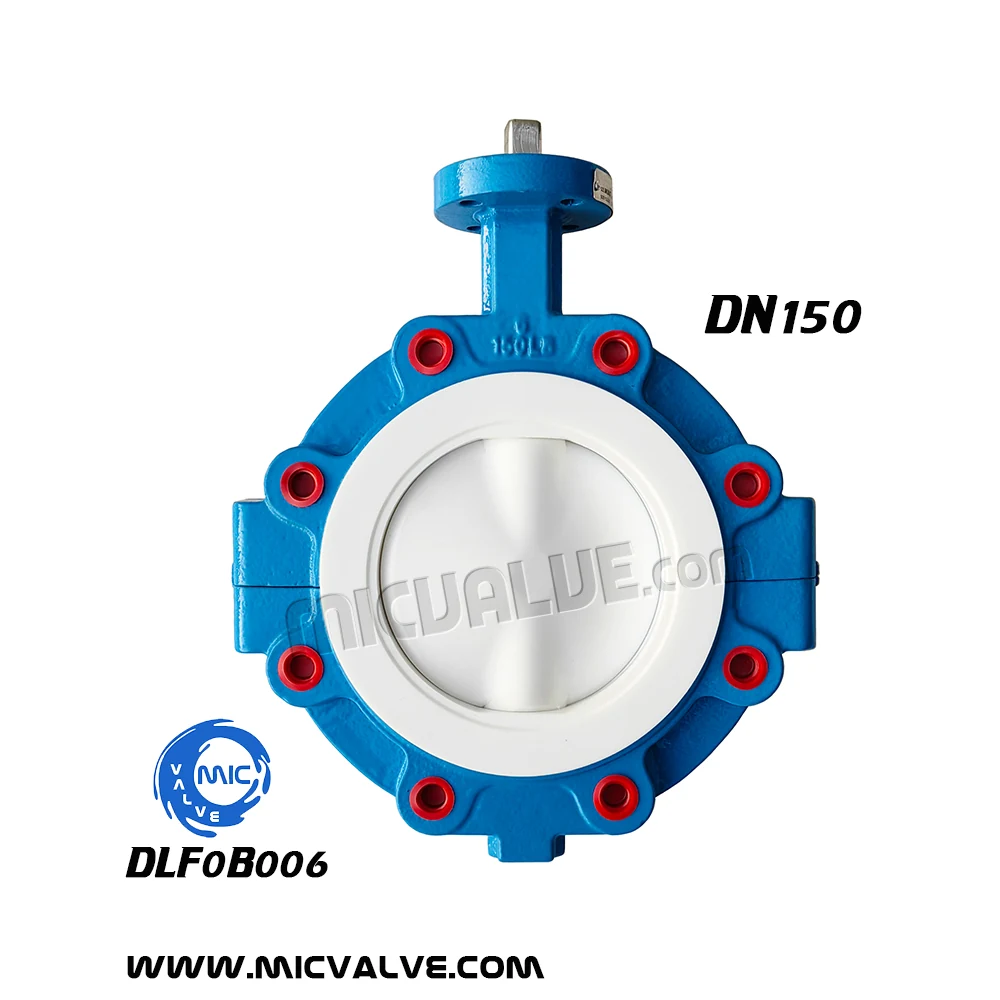
See DLF0B006 Anti-Corrosive Butterfly Valve (Bare Shaft) DN150
Why the Connection Type Matters in the Code
The connection type is not just a detail—it defines how the valve integrates into the pipeline. A flanged valve requires matching flange standards and bolt patterns. A wafer body is clamped between two flanges. A lug body has threaded lugs on each side. The model code must reflect the correct connection to avoid installation delays or rework.
- W or L in the code means wafer or lug body, which affects how the valve is bolted into the line
- F in the code means flanged connection, which requires matching flange dimensions and standards
- U in the code means U-type body, used in specific pipeline layouts where space is limited
- Always confirm the flange standard (e.g. ANSI, DIN, JIS) is included in the order
- The connection type must match the pipeline design and maintenance access requirements
Matching the Seat Material to the Service Medium
The seat material determines the valve's compatibility with the fluid. Rubber seats are standard for clean water and general service. Metal seats are used in high-temperature or high-pressure applications. PTFE or anti-corrosive coatings are used for aggressive chemicals. The model code encodes this choice, but it must be confirmed against the actual medium.
- R in the code means resilient rubber seat, suitable for water and low-viscosity liquids
- M in the code means metal seat, used in high-temperature or high-pressure service
- P in the code means PTFE seat, suitable for chemical and corrosive media
- A in the code means anti-corrosive coating, used in harsh environments like petrochemical plants
- Always verify the seat material matches the temperature, pressure, and chemical composition of the medium
Pressure Rating and Nominal Diameter Are Not Optional
The pressure rating and nominal diameter are critical for safety and performance. The model code lists them numerically, but they must be double-checked against the pipeline design. A mismatch can lead to failure under pressure or excessive cost from over-engineering.
- The pressure rating in the code is in MPa and must match the system's maximum operating pressure
- The nominal diameter in the code is in mm and must match the pipe size at both ends
- DN10 to DN2600 covers most industrial applications, but confirm the range is sufficient
- Pressure ratings from 0.05 to 4.0 MPa cover medium and low-pressure systems
- Always confirm the code’s pressure and size values are correct before placing the order
Final Verification Before You Order
The model code is only as good as the information behind it. Before sending the order, verify all elements in the code against the actual system requirements. Missing or incorrect data leads to delays, rework, or safety risks.
- Confirm the valve type matches the function: isolation, control, or check
- Verify the body style matches the installation method and maintenance access
- Check that the seat material is suitable for the medium and temperature
- Ensure the pressure rating and nominal diameter are correct for the system
- Double-check the connection type and flange standard with the piping drawings
Product Families Covered in This Guide
Butterfly Valves
Short-pattern quarter-turn valves that clamp between two pipe flanges, used for isolation and throttling in medium- and low-pressure industrial pipelines across water, power, petrochemical, heating, marine, pharmaceutical and metallurgical applications.
Gate Valves
Linear motion isolation valves with a rising stem and wedge-shaped disc, used in pipelines where full bore flow and tight shutoff are required at medium and low pressures.
Questions On This Topic
What does the 'R' in a valve model code mean?
The 'R' stands for resilient rubber seat, used in clean water and general service applications. It is not suitable for high temperatures or aggressive chemicals.
Can I use a metal seat valve in a water system?
Yes, but only if the system requires high-temperature or high-pressure operation. For standard water service, a rubber seat is more cost-effective and sufficient.
How do I know which flange standard to specify?
The flange standard (e.g. ANSI, DIN, JIS) must match the existing piping system. Confirm the standard from the piping drawings or site specifications.
Is the model code the same for wafer and lug bodies?
No. The second character in the code differs: 'W' for wafer, 'L' for lug. The rest of the code may be shared, but the body style must be correct.
What if the model code doesn't include the pressure rating?
The pressure rating is required for safety and performance. If it is missing from the code, confirm it with the supplier before ordering.
Need This Checked Against Your Own Line Data
Send the pipe size, pressure, medium and temperature and our engineers will tell you which model fits.