
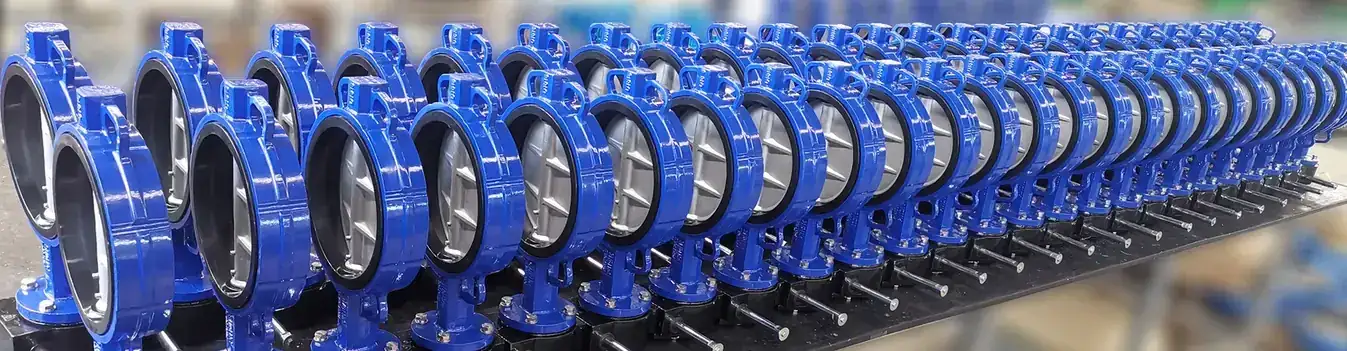
Dual Plate Check Valve Selection Guide
How to size and select a wafer dual plate check valve so it closes before the flow reverses.
How Dual Plate Check Valves Prevent Backflow Without Manual Operation
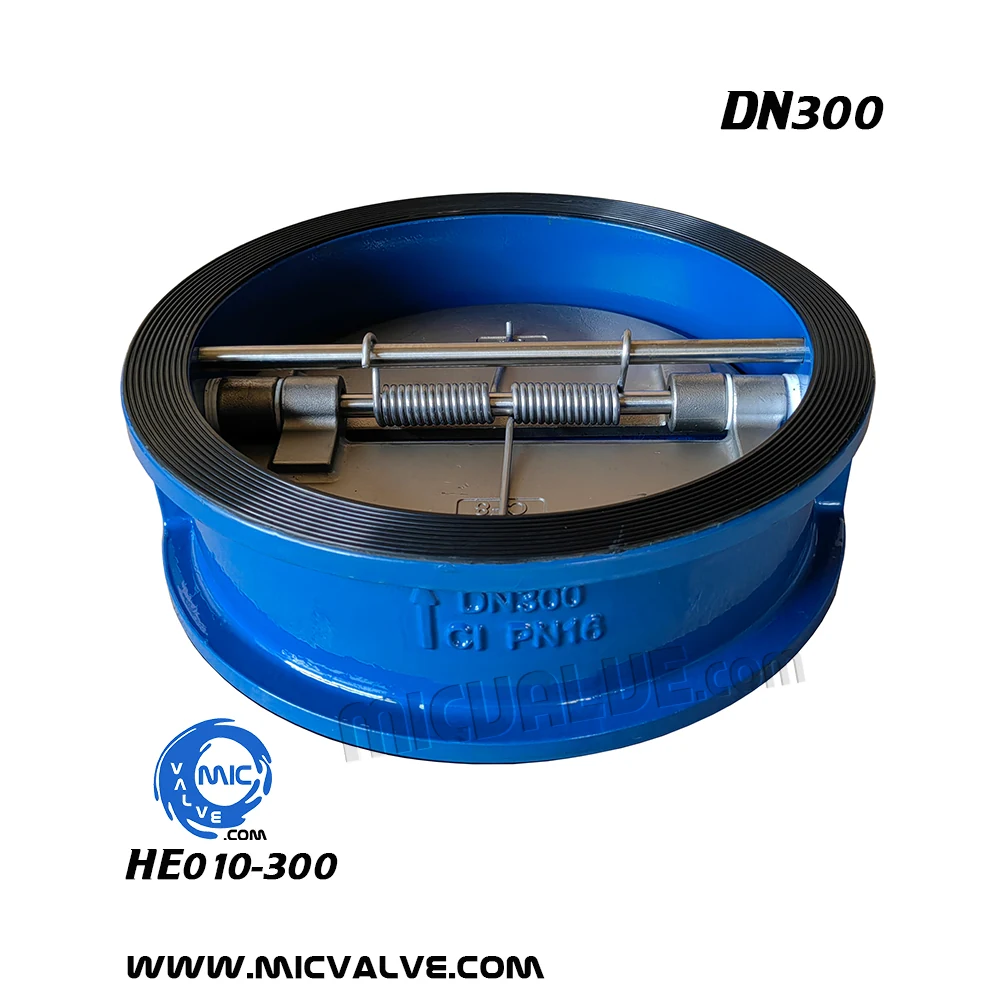
A dual plate check valve uses two hinged discs that swing open with forward flow and close automatically when flow stops or reverses. The discs are linked by a central hinge and return to closed position by gravity and pressure differential. This design allows full bore flow with minimal pressure loss and no moving parts beyond the discs and hinge.
- Two discs pivot on a central hinge, opening fully with forward flow and closing when flow stops
- No external actuation required; closure is automatic based on pressure differential
- Minimal pressure drop due to full bore passage and streamlined disc profile
When to Choose Dual Plate Over Swing or Lift Check Valves
Dual plate check valves are ideal for applications requiring fast closure, low pressure loss, and compact installation. They outperform swing valves in vertical or horizontal lines where space is limited, and avoid the slow closure and water hammer risks of lift check valves. Their balanced design reduces vibration and wear.
- Faster closure than swing check valves, reducing risk of water hammer
- Compact size suitable for tight spaces and high-density piping layouts
- Lower pressure loss compared to lift check valves due to full bore flow
Key Design Features That Affect Performance and Service Life
The hinge mechanism, disc material, and seat design determine how well the valve handles repeated cycling, solids in the medium, and high-pressure conditions. The hinge must resist corrosion and fatigue over time. Discs are typically made from carbon steel, stainless steel, or ductile iron, depending on the application. The seat material must withstand repeated contact without deformation.
- Hinge design must resist fatigue and corrosion under repeated opening and closing
- Disc material selected based on medium aggressiveness and operating pressure
- Seat material must maintain sealing integrity after thousands of cycles
Browse Flanged Type Check Valves
Installation Orientation and Flow Direction Must Be Correct
Dual plate check valves are directional and must be installed with the arrow on the body matching the flow direction. Installing them backwards prevents proper disc movement and can cause incomplete closure or premature wear. They are suitable for both horizontal and vertical installations, but vertical upward flow is preferred for reliable operation.
- Arrow on body must align with actual flow direction; incorrect orientation causes failure
- Vertical upward flow ensures discs close fully by gravity and pressure
- Downward vertical flow may lead to incomplete closure if flow velocity is low
Confirming the Right Model for Your System Before Ordering
The correct dual plate check valve depends on the nominal diameter, pressure rating, material, and medium. These parameters are confirmed on request based on your piping system specifications. Ensure the flange standard matches your existing connections and that the valve’s operating temperature range suits the service.
- Nominal diameter and pressure rating confirmed on request for your system
- Material selection based on medium corrosiveness and temperature
- Flange standard and connection type must match existing piping system
Product Families Covered in This Guide
Wafer Type Dual Plate Check Valves
Automatic non-return valves that clamp between two pipe flanges, used to prevent backflow in pipelines without requiring manual or actuated operation.
Flanged Type Check Valves
Flanged type check valves designed to be bolted between pipe flanges, preventing backflow in pipelines where automatic closure is required without manual intervention.
Questions On This Topic
Can a dual plate check valve be used in a vertical downward flow line?
Yes, but with caution. The discs may not close fully if flow velocity is low, leading to incomplete sealing. For vertical downward service, confirm the operating conditions and consider a valve with a spring-assisted closure if needed.
Is there a difference between dual plate and double disc check valves?
No. Dual plate and double disc refer to the same design. The term 'dual plate' is used in our product range to describe the two-hinged disc configuration.
What is the maximum operating pressure for MIC Valve's dual plate check valves?
The maximum operating pressure is confirmed on request and depends on the nominal diameter and material used. The range covers up to 4.0 MPa as per company specifications.
Do dual plate check valves require maintenance?
Routine inspection is recommended. The hinge and disc seats should be checked for wear or corrosion during scheduled maintenance. No lubrication is required for the hinge mechanism.
Can dual plate check valves be used with slurries or solids in the medium?
Yes, but only if the disc and seat materials are suitable for the solids content and abrasiveness. Confirm material selection based on the medium composition and particle size.
Need This Checked Against Your Own Line Data
Send the pipe size, pressure, medium and temperature and our engineers will tell you which model fits.