
Search how long does shipping from China take and you will see a range of transit estimates. They are useful, but a buyer placing a factory order needs a different number: the time from paying the deposit to having goods at the door. This article breaks that into stages so you can see where time goes and which stages you can control.
The short answer (with caveats)
Forwarders commonly quote port-to-port ocean transit from China to the US West Coast in the range of roughly two to three weeks, and to the East Coast longer, often four weeks or more depending on routing. Air freight is typically counted in days rather than weeks, and express couriers are faster still for small parcels. These are indicative ranges that change with carrier schedules, congestion and season — always get current estimates for your exact route.
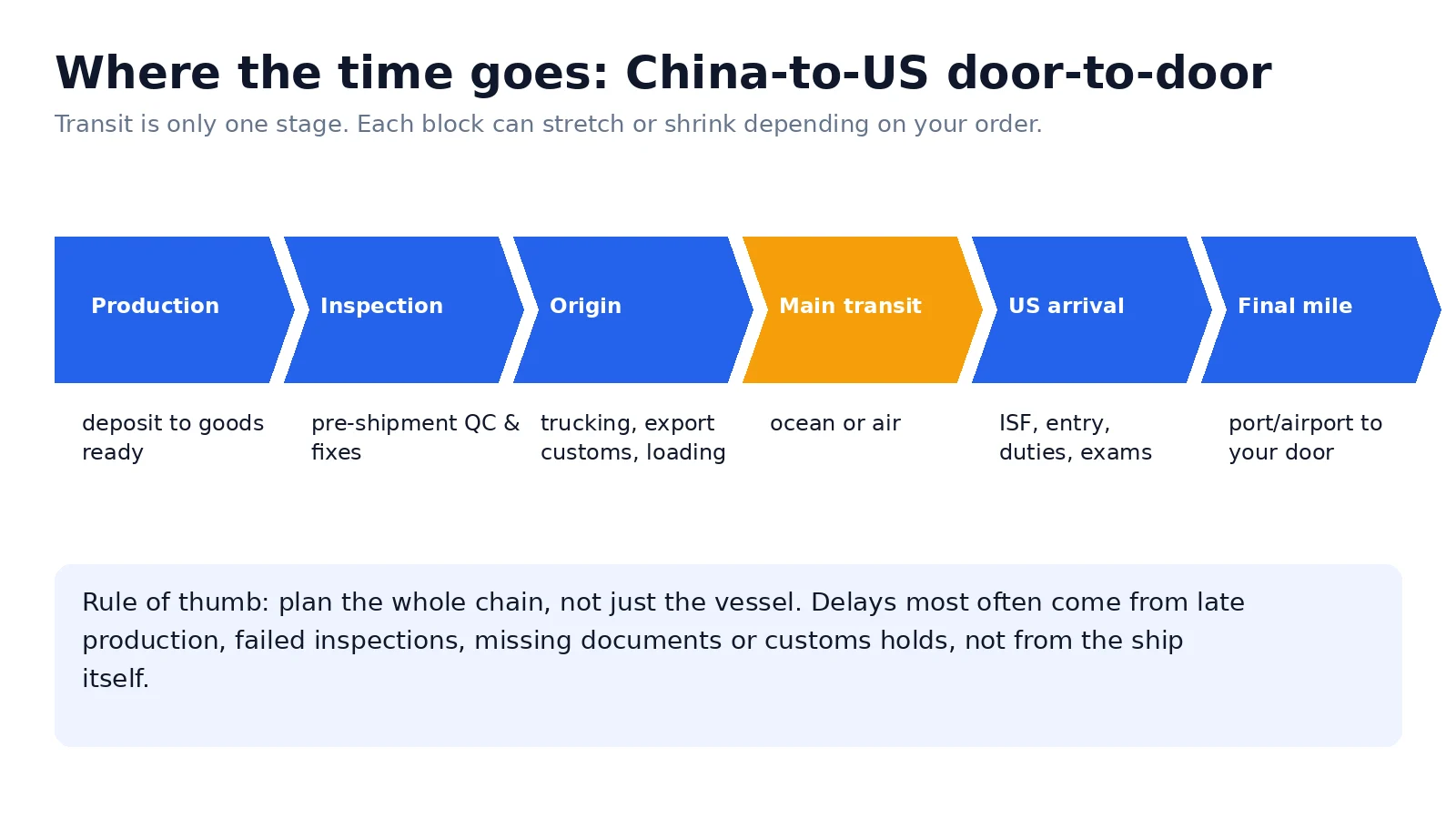
So when someone quotes a China to USA shipping time, ask whether it is port-to-port or door-to-door, and which coast. For a production order, the typical shipping time from China to US doors is dominated by stages outside the voyage. The table below is the more useful way to plan.
Stage-by-stage timeline
| Stage | What happens | What drives the duration |
|---|---|---|
| 1. Production | Materials purchased, goods made and packed | Product complexity, tooling, order size, factory workload, holidays |
| 2. Pre-shipment inspection | Inspector checks a sample of finished goods | Inspector availability; rework time if the lot fails |
| 3. Origin handling | Trucking to port or airport, export declaration, loading | Booking cut-offs, space availability, document readiness |
| 4. Main transit | Ocean voyage or flight | Mode, route, transhipment, weather, congestion |
| 5. US arrival and customs | Unloading, customs entry, duty payment, possible exams | Document accuracy, product type, CBP or partner-agency holds |
| 6. Final mile | Port or airport to your warehouse | Distance inland, trucking or rail availability, appointment slots |
Stage 1: Production is usually the longest part
For many categories, factory lead time is measured in weeks, and custom or tooled products take longer because samples and moulds come first. Ask each supplier for a lead time from deposit or from sample approval, not simply “after order”. Chinese New Year deserves special mention: many factories close for an extended period around the holiday and restart slowly, so orders placed in the weeks before it often ship much later than normal.
Stage 2: Inspection — short, unless it fails
The inspection itself normally takes a day on site, plus time to book the inspector and receive the report. The real risk is a failed lot: rework and re-inspection can add days or weeks. Clear specifications and a defined AQL, covered in our FOB, DDP and AQL guide, reduce that risk.
Stage 3: Origin handling
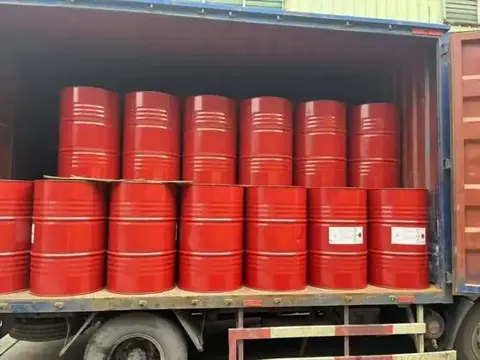
Ocean bookings have cut-off dates for cargo and documents, often several days before the vessel departs. Missing a cut-off typically means waiting for the next sailing. Shared-container (LCL) cargo also passes through a consolidation warehouse at origin and a deconsolidation warehouse at destination, which adds handling time compared with a full container.
Stage 4: Main transit
This is the stage most “time to ship from China to US” answers describe, and published shipping times from China to USA ports are usually averages for this stage alone. The main variables are the destination coast, whether the service is direct or transhipped, and seasonal congestion. For air freight, flight capacity and connections matter more than distance.
Stage 5: US customs
For ocean cargo, the Importer Security Filing must be submitted before loading in China; late or missing filings create problems on arrival. A customs broker files the entry, and most shipments clear without physical examination — but a CBP exam or a hold from another agency (for example for food, cosmetics or electronics that fall under other regulators) can add significant time. Accurate descriptions and correct origin marking help; see why “PRC” alone is not accepted as an origin mark.
Stage 6: Final mile
If your warehouse is inland, rail or truck from the port adds time, and container pick-up and warehouse appointments need to be booked. Free-time limits at ports mean delays here can also cost money in storage and equipment charges.
Ocean vs air vs express: choosing by timeline
| Mode | Speed | Suits |
|---|---|---|
| Ocean FCL (full container) | Slowest transit, fewest handling steps | Large, planned orders |
| Ocean LCL (shared) | Slower than FCL due to consolidation | Smaller volumes that do not fill a container |
| Air freight | Much faster transit | Urgent or high-value, lighter cargo |
| Express courier | Fastest for small parcels, door-to-door | Samples and small urgent shipments |
A common approach for launches is a split shipment: a small air or express shipment to start selling, followed by the main ocean shipment.
A worked planning example (illustrative)
Suppose a buyer needs a private-label housewares order in a US warehouse by a fixed retail date. Working backwards:
- Start with the delivery date and subtract a buffer for customs and final-mile delays.
- Subtract the forwarder’s current transit estimate for the route, plus origin handling and booking cut-offs.
- Subtract inspection and a contingency for one round of rework.
- Subtract the supplier’s written production lead time from sample approval.
- Subtract sampling time. The result is the latest date to approve samples — and check whether that window crosses Chinese New Year or Golden Week.
Done honestly, this exercise answers how long does it take to ship from China for your specific order rather than in general — and it often shows that the order needs to be placed earlier than expected — which is the point.
Holidays and seasons to plan around
Two periods affect China lead times more than any others. Chinese New Year (late January or February, depending on the lunar calendar) closes many factories for an extended period, and workers do not all return immediately afterwards. National Day Golden Week in early October also slows production and logistics. In addition, the months before Western year-end retail seasons are typically busy for ocean freight. Build these into your plan rather than treating them as surprises.
How to shorten the timeline
- Choose suppliers that already make your product category, so no new tooling is needed — browse by industry in the directory.
- Approve samples quickly and keep specifications stable after approval.
- Book inspection as soon as the factory confirms a completion date.
- Have your broker check draft invoices and packing lists before departure.
- Avoid the weeks around major Chinese holidays for critical orders.
For a supplier-side checklist of what to agree before goods leave the factory, see weisourcing’s pre-shipment checklist. For a documented US order, read our case on a container of electric motorcycles to the USA.
Working back from a launch date?
Tell us the product, quantity and the date you need goods in your warehouse. We will point you to directory suppliers whose published lead times and export experience fit that window.