
Custom Jewellery Development
From a napkin sketch or a reference photograph to a finished, set and polished piece, in eight stages the factory publishes and works to.
Almost nothing that leaves this workshop is taken off a shelf. The published process runs sketch, CAD, wax, casting, filing, setting, polishing and cleaning, and the reason it is worth reading rather than skimming is that each stage is cheaper to change than the one after it. A drawing costs an email. A CAD revision costs an afternoon. A recast costs metal and a week. Nobody saves money by approving quickly.
Custom Jewellery Development In 8 Steps
Jewelry Sketch
A piece that is wrong on paper is wrong in gold.
Your napkin sketch, reference photograph or vector artwork is redrawn by the design team into a working drawing with dimensions, stone sizes and metal weight marked.
Jewelry CAD
The model is where cost is decided, not where it is discovered.
The drawing becomes a 3D CAD model. Stone seats, wall thickness and gallery openings are all set here, and the model is what gets approved before anything is cut.
Jewelry Wax
Wax is the cheapest place to change your mind.
Molten wax is injected into the mould cavity under pressure to produce the model for casting. A wax can be held, sized and rejected at a fraction of the cost of a casting.
Jewelry Casting
Metal goes in once.
The wax is invested and burned out, and the piece is cast in the specified karat and colour. Casting faults are found here rather than after a week of setting work.
Jewelry Filing
Surplus metal is removed before it becomes a permanent feature.
Filing takes off the surplus metal from the casting and smooths the surface, the step that decides whether the finished piece feels made or merely produced.
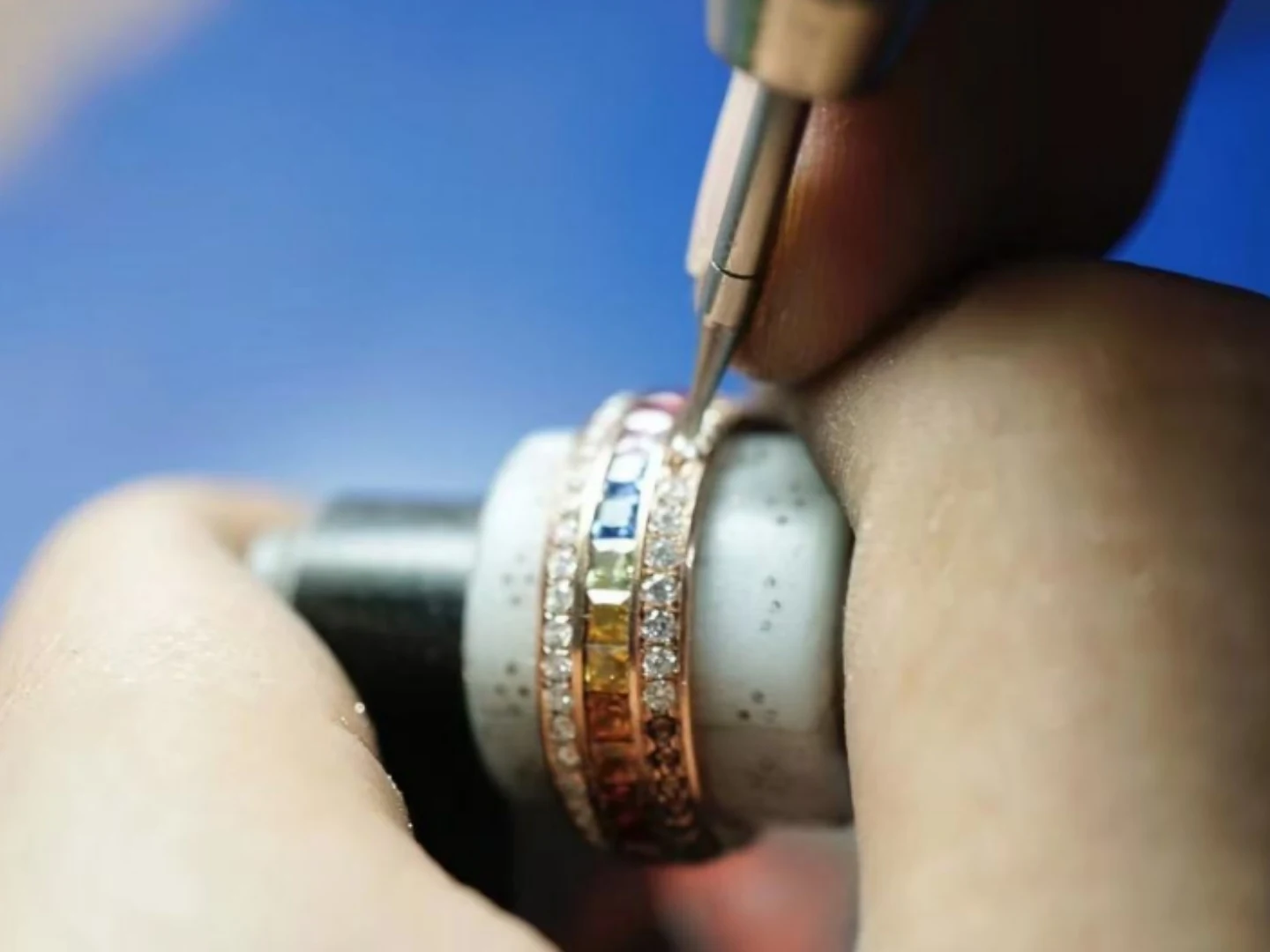
Jewelry Stone Setting
This is the part nobody can outsource to a machine.
Prong, bezel, channel and pave work, done by hand at the bench. Colour sequences are laid out and approved before the first stone goes in.
Jewelry Polishing
Polish is the last chance and the first thing seen.
The piece is polished stage by stage, working around soft and treated stones rather than through them.
Jewelry Cleaning And Inspection
Nothing leaves on the assumption that it is right.
Each piece is cleaned and inspected under magnification: prong tips, seam clearance, bead height, clasp function and, where relevant, the certificate number against the stone.
The Products Referenced Above
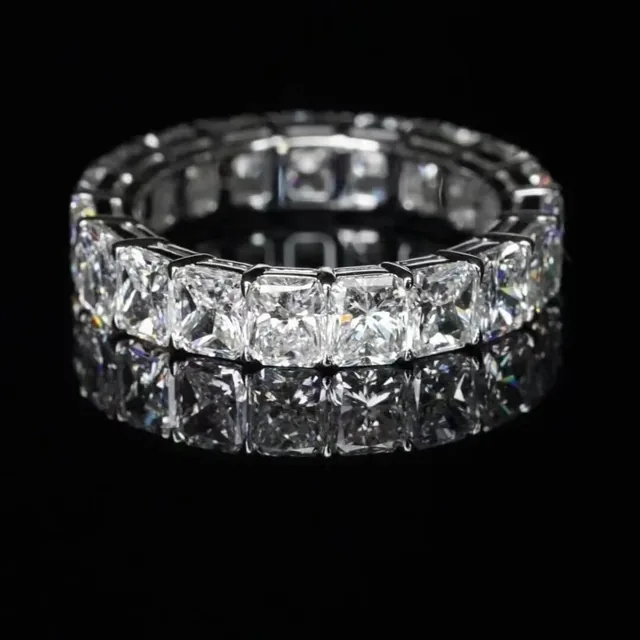
5.7ct Radiant Cut Diamond Eternity Band
A full eternity band carrying approximately 5.7 cttw of elongated radiant cut white diamonds in a shared prong setting, hand made in solid 18K gold.
See the specification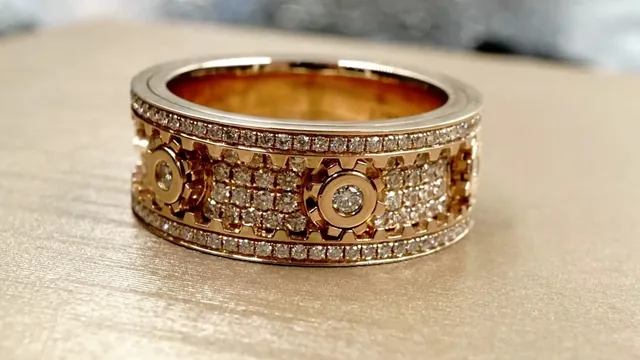
Handmade Geometric 3D Spinner Diamond Band Ring
A wide ornate 3D band with a working pinion: the outer edge turns freely against the core, with diamond accents across the geometric face.
See the specification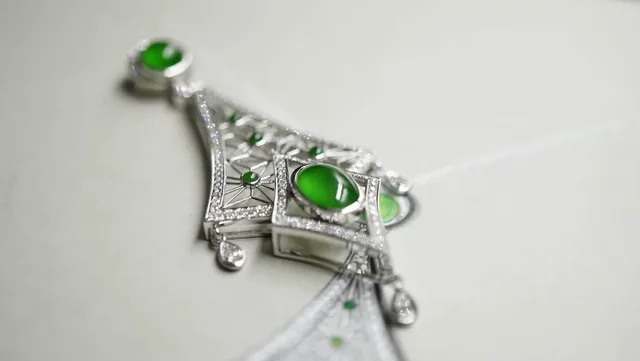
Jadeite Cabochon And Diamond Pendant Necklace
An oval jadeite cabochon of intense green colour and very good translucency, framed with brilliant-cut diamonds and mounted in 18 karat white gold.
See the specification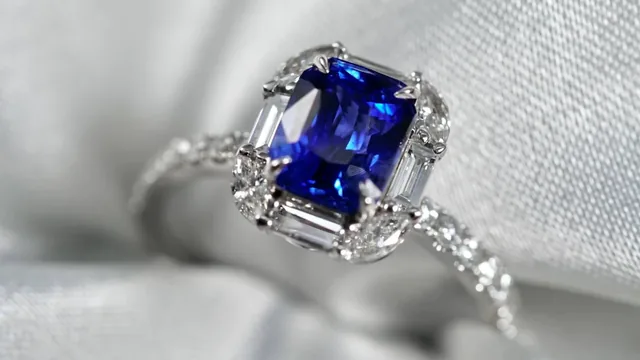
Blue Sapphire And Diamond Halo Engagement Ring
An emerald-cut Ceylon blue sapphire inside a halo of baguette and round diamonds, set in 18K white gold, with the sapphire GIA certified.
See the specification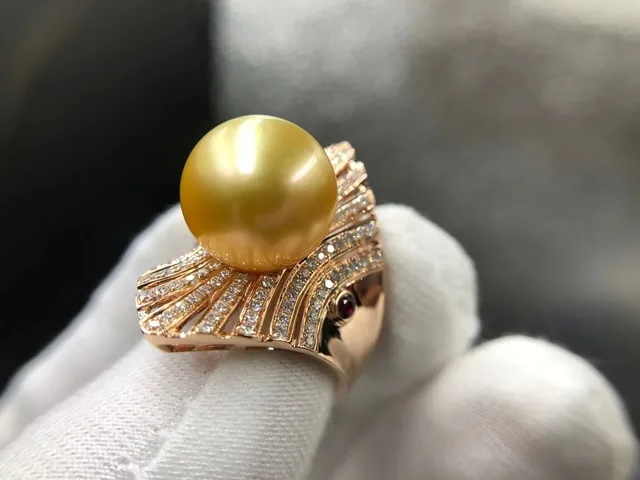
South Sea Golden Pearl And Diamond Ring
A genuine natural South Sea golden round pearl on an 18K fan setting, set with natural VS1-G quality diamonds, designed, drilled and set in-house.
See the specification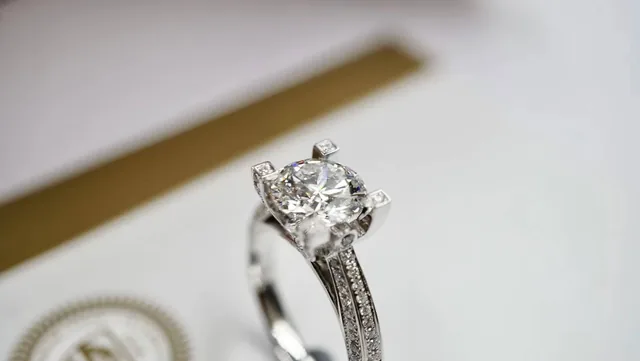
GIA 2.01ct Round Brilliant Engagement Ring
A vintage-styled solitaire carrying a GIA certified 2.01 carat round brilliant cut natural diamond, crafted in 750 solid 18K gold with a low profile shank.
See the specificationCustom Jewellery Development Questions
How rough can my starting point be?
What do I actually approve, and when?
Can I use my own stones?
How long does a first custom piece take?
Start On Custom Jewellery Development
Send the reference, the quantity and the destination market. A recommended starting point with the matching specifications comes back by email.