Syringe filters, chromatography vials, SPE and biotechnology products are produced according to the ISO 9001 standard system. [email protected] +86-15306778688
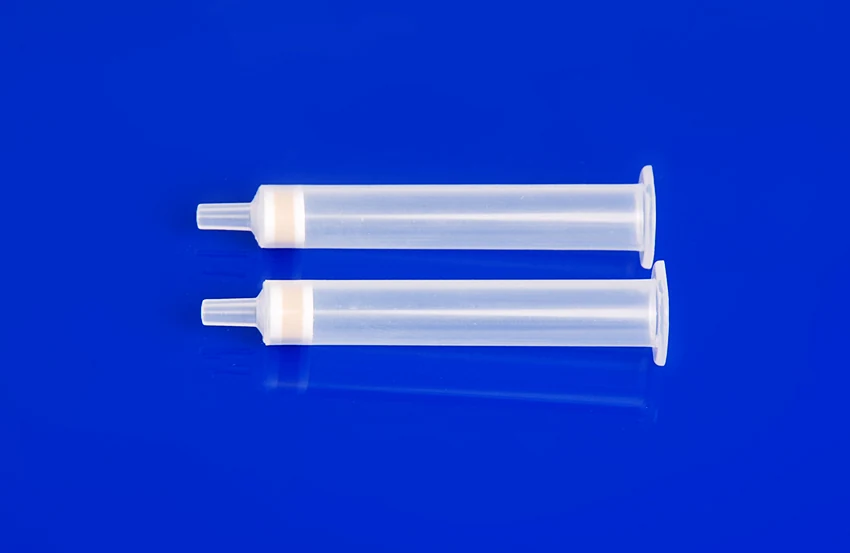
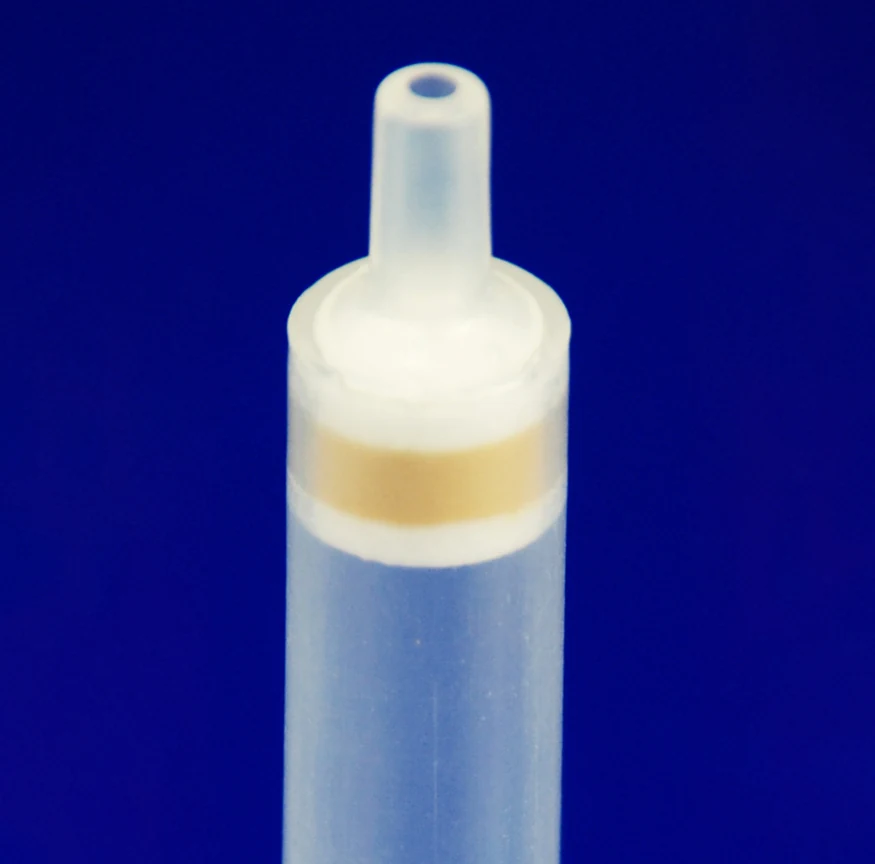
Mixed Mode Base SPE Column product photo 1
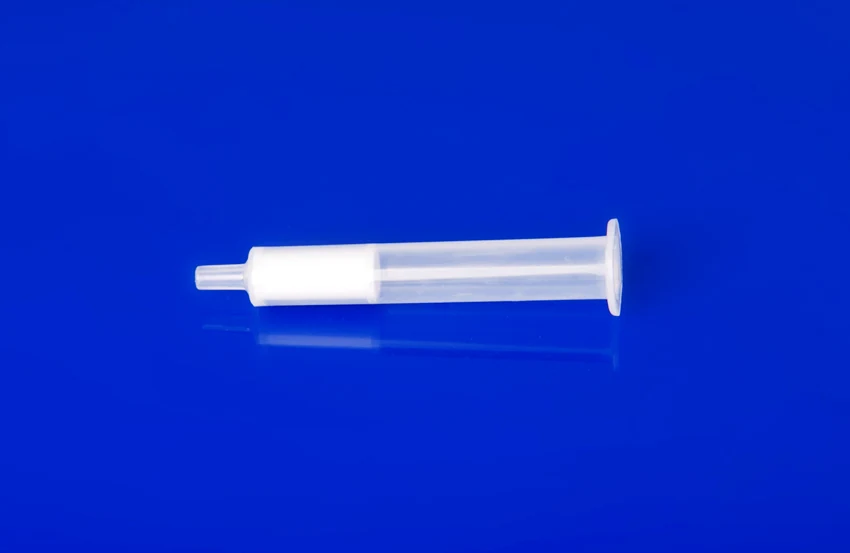
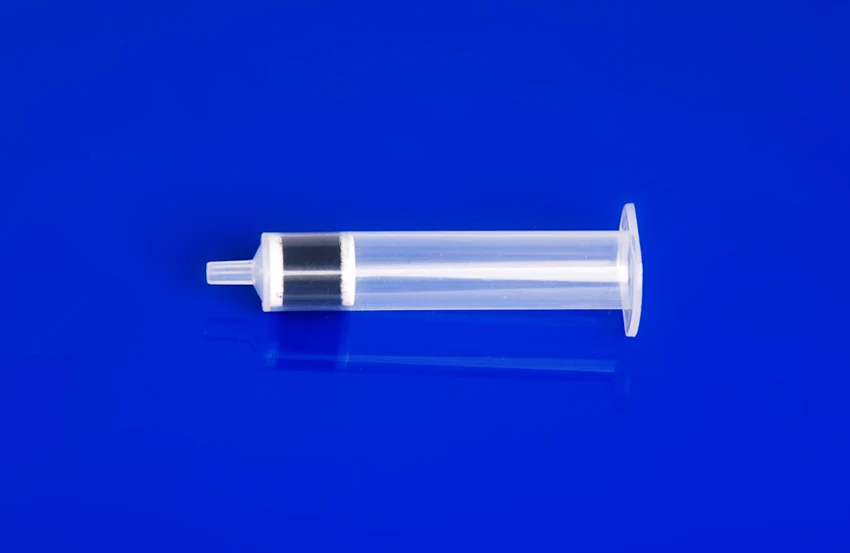
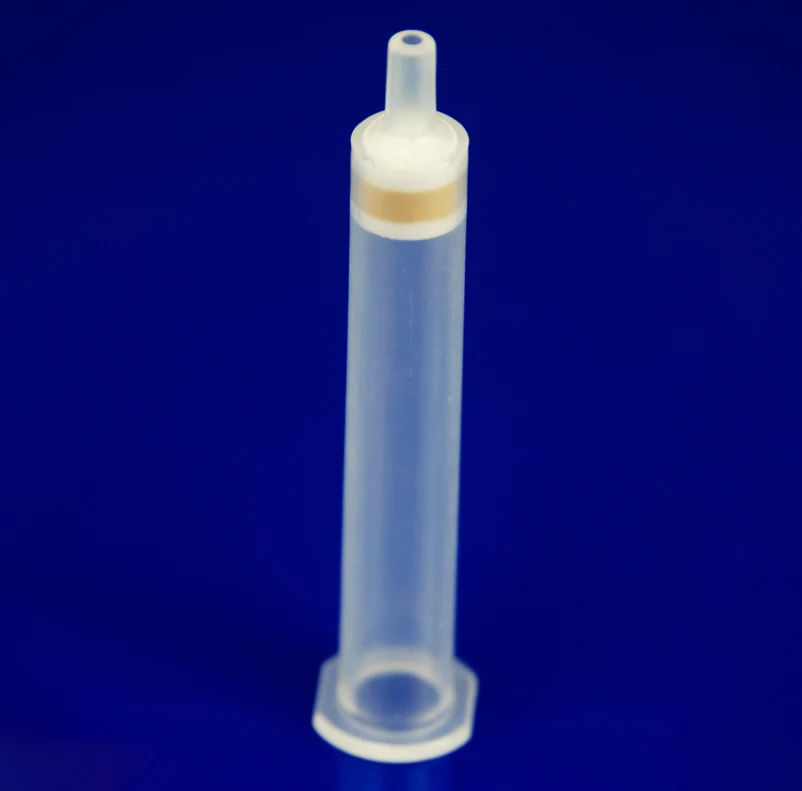
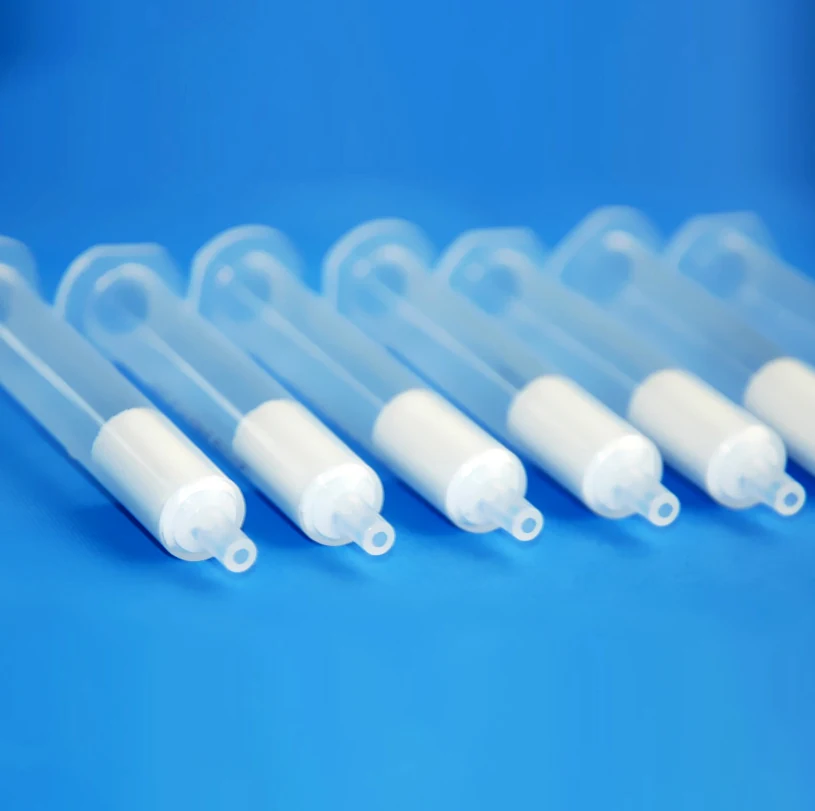
Mixed Mode Base SPE Column product photo 2Mixed Mode Base SPE Column product photo 3
SPE Column

Mixed Mode Base SPE Column

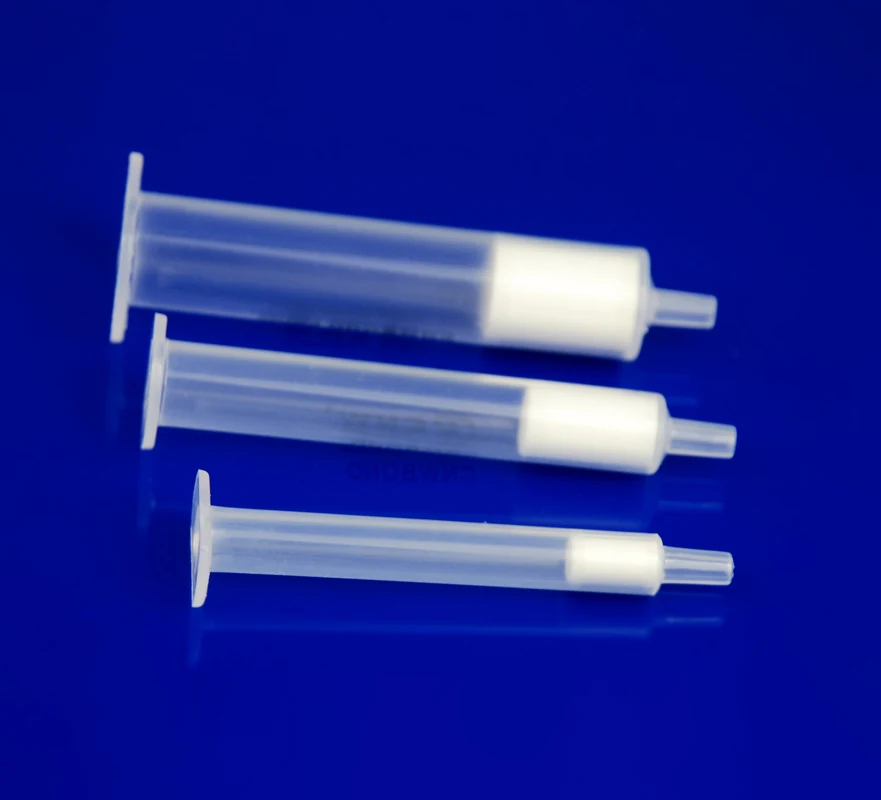
Mixed Mode Base SPE Columns offer a dual retention mechanism for selective extraction of drugs and metabolites from complex biological and food matrices. Each column type combines a hydrophobic interaction with an ion exchange function, reducing strong adsorption that can lead to poor elution. The design minimizes variability in recovery and cleanup performance across batches. Available in four configurations: C8/SAX, C8/SCX, GCB/NH2, and GCB/PSA, with 1 ml, 3 ml, 6 ml, and 10 ml volumes. The columns are suitable for multiresidual pesticide analysis, drug screening, and metabolite determination in challenging samples.

  • Dual retention mechanism avoids over-strong adsorption seen in C18, C8, or single-mode ion exchange columns
  • Consistent recovery and cleanup performance due to low batch-to-batch variability in manufacturing
  • Ultrathin frits between sorbent layers ensure uniform flow and prevent clogging
  • Effective removal of pigments, sterols, fatty acids, and metal ions in food and biological samples
Key Benefits

What This Product Gives You

  • Dual retention mechanism avoids over-strong adsorption seen in C18, C8, or single-mode ion exchange columns
  • Consistent recovery and cleanup performance due to low batch-to-batch variability in manufacturing
  • Ultrathin frits between sorbent layers ensure uniform flow and prevent clogging
  • Effective removal of pigments, sterols, fatty acids, and metal ions in food and biological samples
  • Available in multiple volumes (1 ml, 3 ml, 6 ml, 10 ml) to match sample size and throughput needs
  • Four mixed-mode configurations: C8/SAX, C8/SCX, GCB/NH2, GCB/PSA
  • Dual retention mechanisms: hydrophobic interaction and ion exchange
  • Surface area of 480 m²/g for C8/SAX, C8/SCX, NH2, and PSA components
  • Particle size range of 40 - 75 µm for silica-based sorbents
  • Pore size of 70 Å for C8/SAX, C8/SCX, NH2, and PSA components
  • GCB components have particle size of 100-300 mesh and surface area of 100 m²/g
  • Ultrathin frits between sorbent layers ensure uniform flow and reduce backpressure
  • Available in 1 ml, 3 ml, 6 ml, and 10 ml volumes to suit different sample sizes
  • Designed for use with standard SPE manifolds and vacuum or positive pressure systems
Where It Is Used

Applications And Buyers

Application Scenarios

  • Extracting acidic drugs from blood and urine samples using C8/SAX for improved elution
  • Isolating basic drugs of abuse such as cocaine and ketamine from biological fluids with C8/SCX
  • Cleaning up multiresidual pesticide extracts from vegetables, fruits, and wine using GCB/PSA
  • Removing interferences in food matrices prior to GC/MS or LC/MS analysis of pesticides
  • Processing complex biological samples where strong retention leads to incomplete recovery with standard SPE

Who It Is For

  • Pharmaceutical and clinical laboratories conducting drug and metabolite screening in biological fluids
  • Food safety labs performing multiresidual pesticide analysis in crops, fruits, and beverages
  • Environmental testing labs analyzing soil and water samples for neonicotinoid residues
  • Contract testing organizations requiring consistent SPE performance across multiple sample types
  • R&D labs developing new extraction methods for compounds with challenging physicochemical properties

Problems It Solves

  • Poor elution of analytes due to overly strong adsorption on C18 or SAX columns
  • Incomplete recovery caused by matrix interferences such as pigments, sterols, and fatty acids
  • Clogging or uneven flow in SPE columns due to poor frit design or particle size distribution
  • Inconsistent recovery across batches when using low-control manufacturing processes
  • Need for multiple SPE steps to remove different classes of interferences, increasing time and cost
Data

Specifications

ConfigurationC8/SAX, C8/SCX, GCB/NH2, GCB/PSA
Retention MechanismHydrophobic + Ion Exchange
Surface Area480 m²/g (C8/SAX, C8/SCX, NH2, PSA); 100 m²/g (GCB)
Particle Size40 - 75 µm (C8/SAX, C8/SCX, NH2, PSA); 100-300 mesh (GCB)
Pore Size70 Å
Volume1 ml, 3 ml, 6 ml, 10 ml
Frit DesignUltrathin frits between sorbent layers
Sorbent LayersBilayer (e.g., GCB/NH2, GCB/PSA)
Packing100 pcs per pack (1 ml), 50 pcs per pack (3 ml, 6 ml), 30 pcs per pack (6 ml, 10 ml)

Materials

  • Silica gel with bonded octyl, quaternary ammonium, phenylsulfonic acid, aminopropyl, or primary-secondary amine groups
  • Graphitized carbon black (GCB) for pigment and fat removal
  • Carbon content: 4.5% (NH2), 8% (PSA)
  • Ultrathin frits made from compatible materials to ensure flow uniformity

Customization Options

  • OEM private-label packaging available through the Microlab OEM division
  • Custom column volume and configuration possible upon request
  • Private-label printing and packaging options for distributor and lab brands
  • OEM contract manufacturing and sorbent blending for filter and SPE product lines
How It Is Made

Manufacturing And Quality Control

Manufacturing Process

  • Silica gel functionalization with octyl, quaternary ammonium, phenylsulfonic acid, or amine groups
  • Graphitized carbon black preparation and particle size control
  • Bilayer packing of GCB with NH2 or PSA in precise ratios
  • Frit fabrication and integration between layers
  • Column filling and compression to ensure uniform bed density
  • Sealing and packaging in accordance with volume and configuration

Quality Control

  • Particle size distribution verified within specified ranges (40-75 µm, 100-300 mesh)
  • Surface area and pore size measured per batch to ensure consistency
  • Frit integrity tested for uniform flow and resistance to clogging
  • Sorbent layer alignment confirmed to prevent channeling
  • Batch-to-batch performance monitored for recovery and cleanup efficiency
Comparison

Compared With The Alternatives

Versus C18 or SAX-only SPE columns

Mixed-mode columns reduce strong adsorption, improving elution of analytes that bind too tightly on single-mode sorbents

Versus Single-layer GCB columns

GCB/NH2 and GCB/PSA bilayer columns offer enhanced removal of polar interferences and metal ions due to additional functional groups

Versus Standard SPE cartridges with coarse frits

Ultrathin frits in these columns ensure uniform flow and prevent clogging in high-matrix samples

Versus Reusable SPE columns

Single-use columns eliminate carry-over risk and reduce cleaning validation burden in high-throughput labs
Use Guide

How To Use It

  • Select C8/SAX for acidic drugs in biological fluids; C8/SCX for basic drugs
  • Use GCB/NH2 or GCB/PSA for multiresidual pesticide analysis in food and environmental samples
  • Condition the column with 2-3 ml of methanol, followed by 2-3 ml of water before sample loading
  • Load sample at a controlled rate to avoid overloading or channeling
  • Wash with 2-3 ml of water or weak solvent to remove interferences
  • Elute analytes with 1-3 ml of strong solvent (e.g., methanol, acetonitrile, or acidified solvent)
  • Collect eluate and concentrate for analysis by GC/MS or LC/MS
  • Do not exceed recommended sample volume or flow rate to maintain recovery
Photos

Product Gallery

Also In This Category

Related Products

Read Next

Related Industries And Guides

FAQ

Questions Buyers Ask

Which column should I use for acidic drugs in urine?

Use C8/SAX for acidic drugs such as barbiturates, as it combines octyl hydrophobic interaction with strong anion exchange for effective retention and elution.

Can I use GCB/PSA for neonicotinoid pesticides in wine?

Yes. GCB/PSA is specifically effective for cleaning up neonicotinoid residues in wine, fruit, and soil due to its enhanced ion exchange and metal chelation capabilities.

What is the difference between GCB/NH2 and GCB/PSA?

GCB/PSA has higher carbon content (8%) and additional secondary amine groups, giving it stronger ion exchange and metal chelation ability compared to GCB/NH2 (4.5% carbon).

How do I condition the column before use?

Condition with 2-3 ml of methanol, then 2-3 ml of water to prepare the sorbent for sample loading.

What volumes are available?

Available in 1 ml, 3 ml, 6 ml, and 10 ml sizes, with packaging quantities of 100, 50, or 30 pieces per pack depending on volume.

Can I get these under my own brand?

Yes. The Microlab OEM division offers private-label packaging, printing, and contract manufacturing for SPE columns and related products.

Get A Quote For Mixed Mode Base SPE Column

Tell us the membrane, pore size, diameter and quantity you need, or describe the sample and we will specify it.

Language