I once bought a cheap wireless charger that could barely charge my phone. and learned to pick chargers more carefully. Choose a wireless charger by matching standards (MagSafe or Qi), power output,...
I once bought a cheap wireless charger that could barely charge my phone. and learned to pick chargers more carefully.
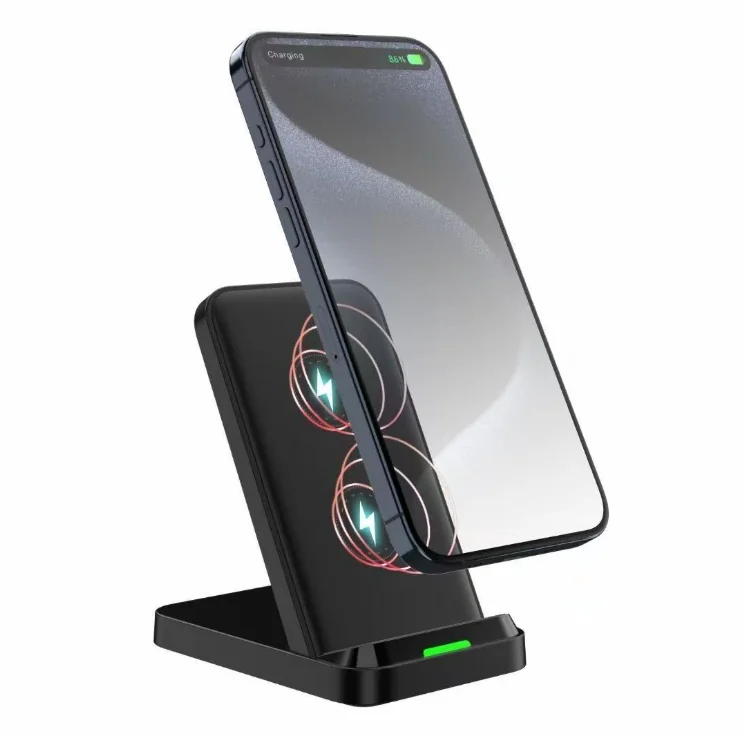
Choose a wireless charger by matching standards (MagSafe or Qi), power output, device fit, thermal design, and safety certifications for reliable, fast, and safe charging.
pick the charging standard your device supports, then choose the highest safe wattage, good thermal design, and certified models. Read on to learn practical checks and trade-offs.
Stop here for the short tip. Keep reading for detailed comparisons and real-use advice.
I tested several pads, stands, and car mounts to develop a buying checklist.
A good wireless charger matches your device, delivers the rated power reliably, has good heat control, uses quality materials, and carries safety certifications like Qi/ETL/CE.
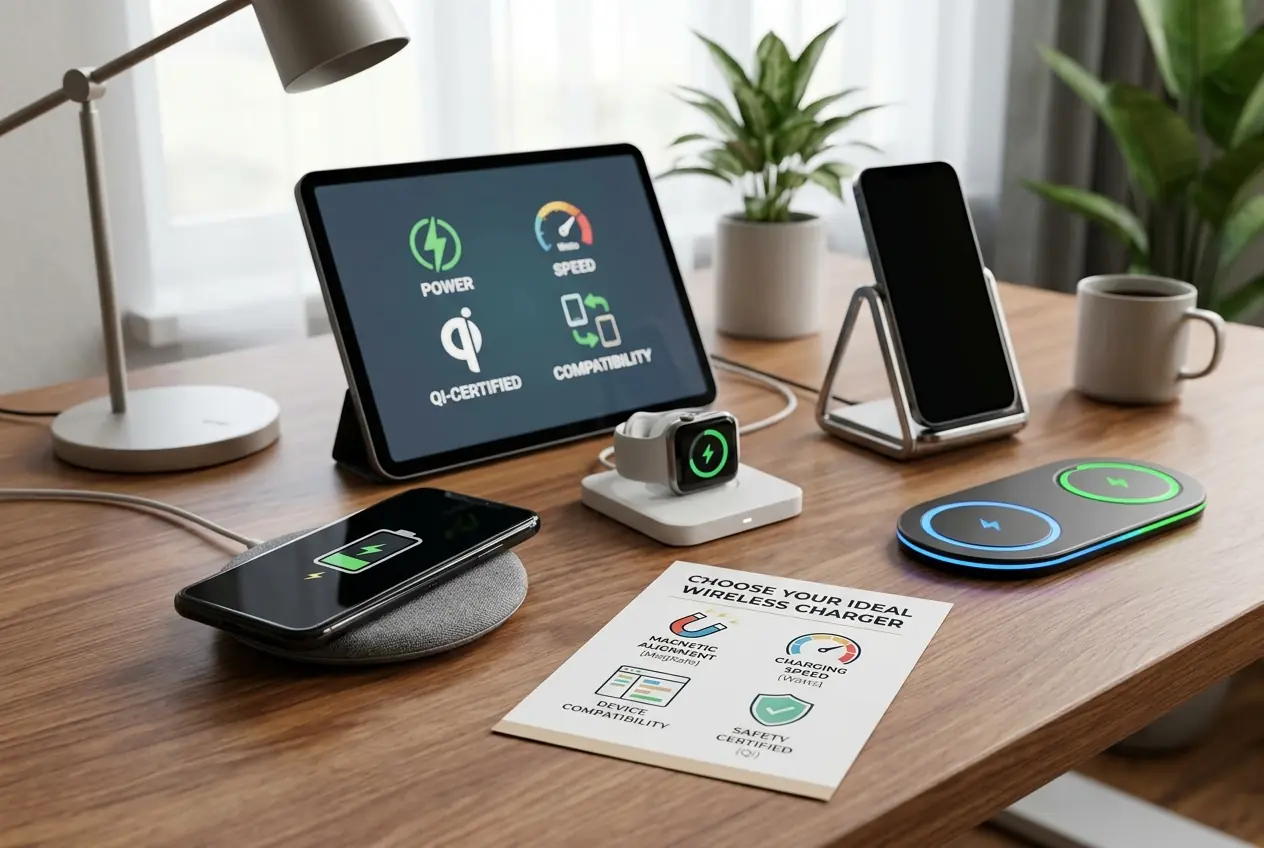
I now always check power, alignment, and certification before buying.
What I check step by step:
I follow this checklist and avoid models with exaggerated specs or no proof of testing.
I compared MagSafe and Qi pads to see practical differences on iPhones and other phones.
MagSafe gives better alignment and up to 15W on supported iPhones. Qi is more universal and works with many brands. Pick MagSafe for iPhone convenience, and Qi for broad device compatibility.
I use MagSafe at my desk and a Qi pad for guests with non-iPhones.
Direct comparison:
Which is better? Choose MagSafe for iPhone models that support it and when you want precise alignment and faster, steadier charging. Choose Qi when you need cross-brand compatibility or when you charge many different devices.
I tested a single pad and a 3-in-1 stand to find what suits daily life.
A regular wireless charger is simpler and cheaper. A 3-in-1 charger adds convenience by charging phone, earbuds, and watch at once. Choose based on device ecosystem, space, and travel needs.
I keep a 3-in-1 at my bedside and a compact pad for travel.
Trade-offs to consider:
My choice: I keep a 3-in-1 at home for convenience and a compact Qi pad for travel. If you only charge one device wirelessly, a regular pad is the smarter, cheaper pick.
Choose a wireless charger that matches your device standard, offers good alignment, manages heat, and has proper certifications.10 Pick MagSafe for compatible iPhones and Qi for wide compatibility.11 Use a 3-in-1 if you value convenience; use a single pad for travel or single-device needs.
"Qi (standard) – Wikipedia", https://en.wikipedia.org/wiki/Qi_(standard). Qi is widely adopted as the standard for wireless charging in smartphones, supported by major manufacturers including Samsung, Google, and Apple. Evidence role: expert_consensus; source type: encyclopedia. Supports: Most phones use Qi as the standard for wireless charging.. ↩
"MagSafe (wireless charger) – Wikipedia", https://en.wikipedia.org/wiki/MagSafe_(wireless_charger). Apple’s MagSafe technology is designed to deliver up to 15W of wireless charging power to compatible iPhone models, as stated in official specifications. Evidence role: mechanism; source type: institution. Supports: MagSafe can deliver stable 15W wireless charging to supported iPhones.. Scope note: The 15W output is specific to iPhone models that support MagSafe and may vary under non-ideal conditions. ↩
"[PDF] Thermal Design and Optimization of High-Power Wireless Charging …", https://www.osti.gov/servlets/purl/1871896. Wireless charging efficiency is significantly affected by coil alignment, with misalignment leading to energy loss and increased heat generation. Evidence role: mechanism; source type: research. Supports: Misalignment during wireless charging reduces efficiency and increases heat production.. Scope note: The extent of efficiency loss and heat generation depends on the specific charger and device model. ↩
"Is it the phone itself overheating or the charging pad causing it to …", https://www.reddit.com/r/CX50/comments/119wwjq/is_it_the_phone_itself_overheating_or_the/. Excessive heat during charging can lead to reduced charging speeds and potential long-term damage to battery health, as supported by battery research studies. Evidence role: mechanism; source type: research. Supports: Overheating during wireless charging can slow down charging and stress the battery over time.. Scope note: The impact of overheating varies by battery type and charger design. ↩
"Qualified intermediary general FAQs | Internal Revenue Service", https://www.irs.gov/businesses/corporations/qualified-intermediary-general-faqs. Qi certification guarantees that wireless chargers meet interoperability standards set by the Wireless Power Consortium. Evidence role: definition; source type: institution. Supports: Qi certification ensures interoperability among wireless charging devices.. Scope note: Certification ensures compatibility but does not guarantee performance quality beyond the standard. ↩
"Does anyone know what the separate magnetic line below … – Reddit", https://www.reddit.com/r/MagSafe/comments/om41zs/does_anyone_know_what_the_separate_magnetic_line/. MagSafe technology uses integrated magnets to align the iPhone with the charger for optimal charging efficiency. Evidence role: mechanism; source type: institution. Supports: MagSafe magnets align the phone optimally for efficient charging.. Scope note: The alignment benefits are specific to devices designed for MagSafe compatibility. ↩
"Snap-on Phone Stand & Wallet MOVAS™ – MagSafe Compatible", https://www.moft.us/products/iphone-stand-wallet-magsafe-compatible?srsltid=AfmBOoqr6ySSLIEN03_aaZb0K74qWUWdIc_naRdm3lfz4TElks7M3l76. Apple’s MagSafe ecosystem includes accessories such as wallets, mounts, and stands, designed to integrate seamlessly with MagSafe-compatible devices. Evidence role: general_support; source type: institution. Supports: MagSafe offers a growing ecosystem of compatible accessories like wallets, mounts, and stands.. Scope note: The ecosystem is primarily focused on Apple devices and may not extend to non-Apple products. ↩
"This Is The 3-in-1 Charger You’ve Been Looking For … – YouTube", https://www.youtube.com/watch?v=n5CmQ8Vfznk. 3-in-1 wireless chargers are designed to charge multiple devices simultaneously, reducing the need for separate cables and chargers. Evidence role: general_support; source type: research. Supports: 3-in-1 wireless chargers reduce cable clutter and consolidate device charging.. Scope note: The convenience depends on owning multiple devices that support wireless charging. ↩
"UL, CSA, ETL and CE: What do they stand for? – Hydrofarm", https://www.hydrofarm.com/ul-csa-etl-and-ce. Certifications like Qi, CE, FCC, and ETL indicate compliance with safety and interoperability standards for wireless chargers. Evidence role: definition; source type: government. Supports: Certifications like Qi, CE, FCC, and ETL ensure safety and interoperability for wireless chargers.. Scope note: Certifications ensure compliance but do not guarantee performance beyond the certified standards. ↩
"The Best Wireless Chargers to Refuel Your Phone (or Watch) – WIRED", https://www.wired.com/gallery/best-wireless-chargers/. Selecting a wireless charger based on device compatibility, alignment, heat management, and certifications ensures reliable and safe charging. Evidence role: expert_consensus; source type: education. Supports: Choosing a wireless charger based on compatibility, alignment, heat management, and certifications ensures reliable charging.. Scope note: The effectiveness of these criteria depends on the specific charger and device model. ↩
"Qi (standard) – Wikipedia", https://en.wikipedia.org/wiki/Qi_(standard). MagSafe is optimized for iPhone models 12 and later, while Qi is the universal standard compatible with a wide range of devices. Evidence role: expert_consensus; source type: encyclopedia. Supports: MagSafe is ideal for compatible iPhones, while Qi offers broader compatibility across devices.. Scope note: MagSafe compatibility is limited to specific iPhone models, whereas Qi supports broader device categories. ↩
We manufacture what these articles describe, in China and in Vietnam.
FUMEI builds power adapters, wall chargers, car chargers and wireless chargers in China and Vietnam.