Eyeing the affordable iPhone SE but unsure if it keeps up with modern features like wireless charging? Confused whether this budget-friendly option means sacrificing cable-free convenience? Let’s...
Eyeing the affordable iPhone SE but unsure if it keeps up with modern features like wireless charging? Confused whether this budget-friendly option means sacrificing cable-free convenience? Let’s sort this out quickly for you.
Yes, but with a catch! The iPhone SE (2nd generation, released in 2020)1 and the iPhone SE (3rd generation, released in 2022)2 DO support wireless charging. However, the original iPhone SE (1st generation, from 2016) does NOT have this feature.
So, the answer depends entirely on which iPhone SE you’re talking about. This is a common point of confusion I see, especially for folks like David who might be looking at refurbished or older stock alongside the latest models. Knowing the difference is key before you buy or grab a wireless charger. Let’s dive into which models work and how the feature operates on them.
Worried you might grab an older iPhone SE thinking it charges wirelessly? Confused because Apple used the same "SE" name for phones released years apart? Let’s pinpoint exactly which models have the necessary tech.
Only the newer iPhone SE models have wireless charging: the iPhone SE (2nd generation, 2020) and the iPhone SE (3rd generation, 2022). They support the standard Qi wireless charging3 protocol thanks to their glass backs, inherited from the iPhone 8 design.
)
Understanding the lineage of the iPhone SE is key here. The name has been applied to distinctly different hardware over the years.
iPhone SE (1st generation – 2016):
iPhone SE (2nd generation – 2020):
iPhone SE (3rd generation – 2022):
For someone like David managing inventory or buying stock, knowing this distinction is vital. You can’t just order "iPhone SE wireless chargers" without specifying compatibility or ensuring the phones themselves are the 2020 or 2022 models. The physical design (iPhone 5S style vs. iPhone 8 style) is the easiest visual cue.
Here’s a simple table summarizing it:
| iPhone SE Model | Release Year | Wireless Charging? | Key Design Factor |
|---|---|---|---|
| iPhone SE (1st gen) | 2016 | No | Aluminum Back |
| iPhone SE (2nd gen) | 2020 | Yes (Qi) | Glass Back |
| iPhone SE (3rd gen) | 2022 | Yes (Qi) | Glass Back |
Okay, so your 2nd or 3rd gen iPhone SE supports wireless charging. But how well does it work? Concerned it might be slow or lack features found on higher-end iPhones? Let’s look at the specifics.
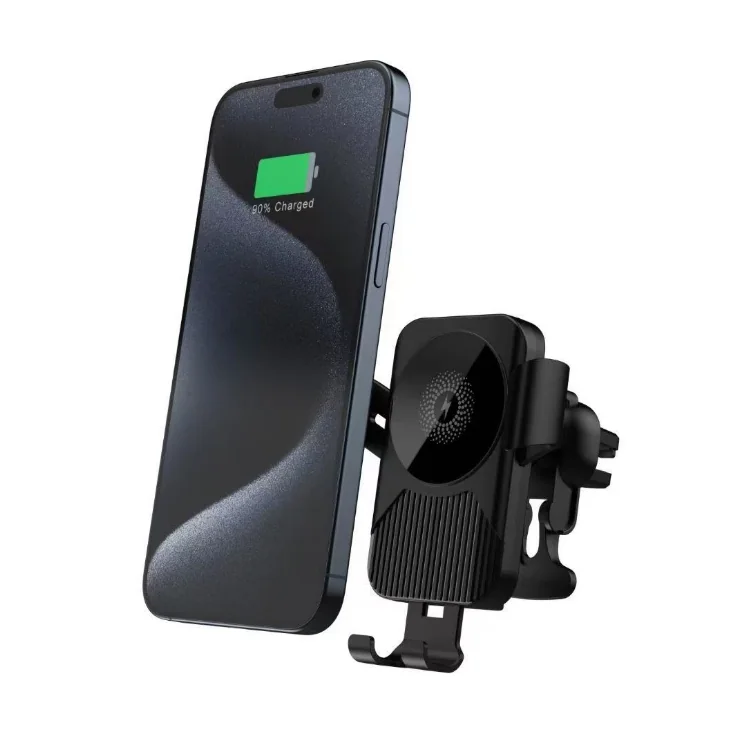
The compatible iPhone SE models use the universal Qi (pronounced ‘chee’) wireless charging standard, charging at speeds up to 7.5 watts. They do not support Apple’s faster, magnetic MagSafe wireless charging system found on iPhone 12 and newer flagship models.
Understanding the type and speed of wireless charging on the SE is important for setting expectations.
For practical users like David, the 7.5W Qi charging on the SE is a nice-to-have convenience feature rather than a high-speed power solution. It’s perfect for placing on a nightstand charger overnight. Just ensure you’re using a quality, Qi-certified charger – like the ones we rigorously test at FUMEI – for safety, reliability, and optimal 7.5W speed. Uncertified chargers might be slower or pose safety risks.
Yes, the iPhone SE supports wireless charging, but only the 2nd (2020) and 3rd (2022) generation models. They use the standard Qi protocol (up to 7.5W) and lack MagSafe. The original 2016 SE doesn’t support it.
Explore this link to understand the features and capabilities of the iPhone SE (2nd generation), including its wireless charging support. ↩
Discover the enhancements in the iPhone SE (3rd generation) and how it compares to previous models, especially in terms of charging. ↩
Learn about Qi wireless charging technology, its benefits, and how it works to enhance your charging experience. ↩
We manufacture what these articles describe, in China and in Vietnam.
FUMEI builds power adapters, wall chargers, car chargers and wireless chargers in China and Vietnam.